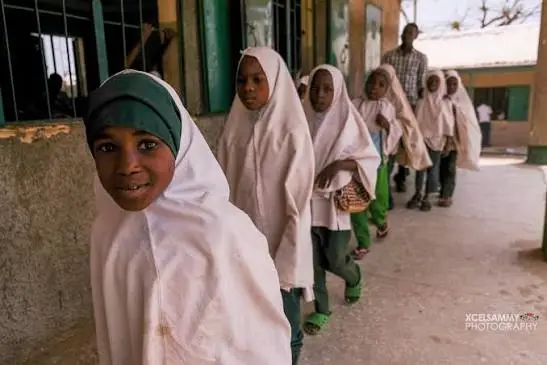
Northern Nigeria’s struggle with insecurity is not new, but the steady increase in school abductions, attacks and mass kidnappings over the last decade has turned classrooms into danger zones.
The 2014 mass abduction of 276 girls from Government Girls Secondary School, Chibok in Borno State by Boko Haram was the watershed moment. That night, April 14, 2014, jolted Nigeria and the world; 276 girls kidnapped, most taken into the forest, many still unaccounted for more than a decade later.
Although some girls were later rescued, several remain in captivity. A 2024 military rescue of one woman abducted as a Chibok girl and now an adult became a rare blemish of hope, yet it shows how slowly justice and rescue progress.
Since Chibok, the pattern did not wane, it proliferated. What began as insurgency-driven abductions expanded into widespread kidnappings by criminal and bandit networks, spreading across multiple northern states.
Notable Abduction Incidents Since 2014
- In 2018, over 110 girls were abducted from Government Science School, Dapchi in Yobe State. Most were released after negotiations but the attack highlighted how schoolgirls remained primary targets even outside core conflict zones.
- In December 2020, more than 300 boys were taken from Government Science Secondary School, Kankara in Katsina state, one of the largest kidnappings on record. Many were eventually freed, but the psychological and societal impacts were deep.
- In February 2021, Government Girls Science Secondary School, Jangebe in Zamfara state was raided; about 279 young female students were kidnapped. Some were later released.
- In March 2021, the Federal College of Forestry Mechanization, Afaka in Kaduna State was attacked and 39 students abducted, 23 females and 16 males.
- In March 2024, gunmen struck Government Secondary School, Kuriga in Kaduna, abducting hundreds of pupils. The reported number varied (initially 287), reflecting the volatility and difficulty of accurate counts in conflict zones.
- Most recently in 2025, the attack on St. Mary’s Catholic School, Papiri in Niger State saw about 303 schoolchildren and 12 teachers abducted, with both male and female students among them.
According to a recent report compiling incidents since 2014: more than 2,496 students have been abducted in 92 known school attacks. Many remain missing, and the actual figure may be significantly higher, particularly accounting for unreported cases in remote or inaccessible communities.
Further, a recent analysis by Save the Children found that between January 2024 and late 2025 alone, at least ten major school attacks affected more than 670 children, signalling that the crisis is not easing but worsening.
The Human Cost: Fear, Trauma, and the Collapse of Girls’ Education
Every one of these incidents leaves deeper wounds than the bodies recovered, communities traumatized, trust shattered, and families confronted with agonizing decisions.
In the aftermath of abductions and repeated attacks, many families, especially those with girls no longer see school as a path to hope. For them, it’s a potential trap. Statistics and field reports show that many girls, once enrolled in school, never return. The fear, the uncertainty and the memory of what happened to their peers deter them.
Indeed, according to a report from UNICEF, only 37 percent of schools across 10 vulnerable states have rudimentary early-warning systems or safety measures in place to alert communities or authorities about imminent threats. That means the vast majority remain exposed.
The closures often indefinite and the widespread fear have contributed to stark declines in school attendance, especially among girls. Many remain at home; some are married off early; others are pushed into informal labour or domestic work, their dreams of education and empowerment frozen by violence.
Activists warn that unless security and educational reforms are urgently implemented, Northern Nigeria risks losing a generation: a generation whose potential remains trapped in fear, instead of classrooms.
What the Numbers and History Demand: Action, Not Sympathy
The decades-long history of mass kidnappings from schools from Chibok through Dapchi, Kankara, Jangebe, Kuriga, Afaka, Papiri and beyond, reveals a grim pattern of repeated failure to safeguard education. Innocent children continue to be targets; entire communities live in dread; and educational progress, especially for girls is being reversed.
The data makes the urgency clear: nearly 2,500 students abducted; dozens of major attacks; hundreds still unaccounted for; thousands of schools closed; millions of children displaced. Calls for the protection of schools as “safe zones” with proper security, early-warning systems, community intelligence, safe transport, and psychosocial support are not optional anymore. They are a national emergency. Organizations like UNICEF have repeatedly urged these measures; yet implementation remains patchy at best.
For the future of Northern Nigeria and for the education and empowerment of its youth, especially girls, the time to act decisively is now.