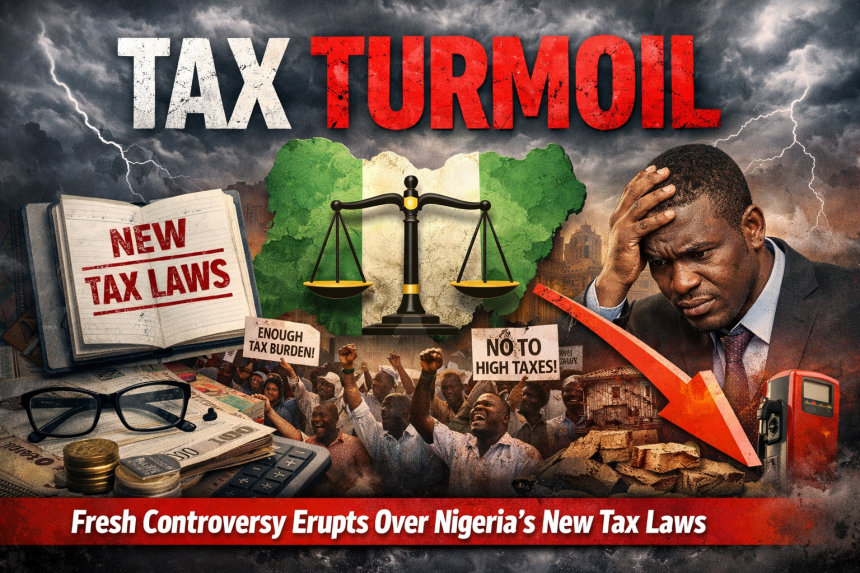
Fresh controversy has erupted over Nigeria’s newly signed tax reform laws, as opposition groups and some lawmakers express objections ahead of their scheduled implementation in January 2026.
The legislation, championed by the Federal Government, is designed to simplify the tax system, enhance compliance, and protect low-income earners. However, critics allege that certain provisions were altered after approval by the National Assembly, raising concerns about potential economic hardship and revenue implications.
Opposition parties and several lawmakers argue that the changes could disproportionately affect ordinary Nigerians, particularly low-income earners and small business operators, despite the government’s assurances.
Lawmaker (anonymously): “While we support tax reform in principle, the recent alterations to the law raise questions about fairness, transparency, and implementation. Nigerians need clarity before this law takes effect.”
Some groups have called for a suspension of the new tax laws and further public consultation, warning that improper rollout could aggravate economic challenges already facing households and businesses.
In response, the Presidency has reiterated that the laws are irreversible, emphasizing that they are aimed at:
• Boosting government revenue
• Streamlining tax administration
• Protecting low-income earners
• Enhancing fiscal accountability
Government officials insist the reforms are critical for strengthening Nigeria’s economy, promoting compliance, and addressing systemic inefficiencies in the tax collection framework.
Presidency Spokesperson: “The tax reforms are part of our ongoing efforts to modernize Nigeria’s revenue system and ensure equitable contributions from all sectors.”
Analysts note that while tax reform is essential for sustainable economic growth, successful implementation will require robust public awareness, transparent communication, and phased adoption.
Critics argue that any lack of clarity or perceived unfairness could trigger resistance from citizens and businesses, potentially impacting compliance and government revenue projections.
As Nigeria prepares for the January 2026 rollout of new tax laws, the debate underscores the delicate balance between economic reform, public acceptance, and transparency. Both the Federal Government and opposition groups will need to engage in constructive dialogue to ensure the reforms achieve their intended objectives without exacerbating public grievances.