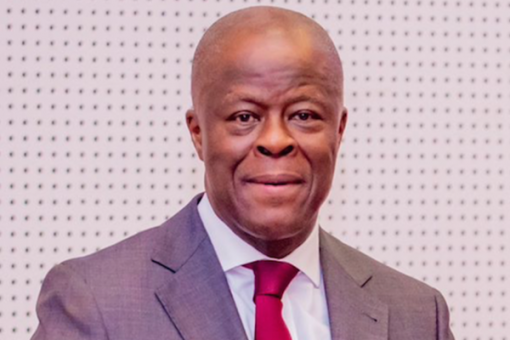
Nigeria’s Minister of Finance and Coordinating Minister for the Economy, Wale Edun, says the country’s long-awaited path to economic recovery has officially begun, following months of fiscal and monetary adjustments under President Bola Tinubu’s administration.
Speaking at a policy briefing in Abuja, Edun expressed optimism that recent government interventions including subsidy removal, foreign exchange reforms, and targeted investments in key sectors are beginning to yield tangible results.
According to the minister, the Nigerian economy, which faced turbulence in the first half of 2024, has begun showing signs of resilience and growth.
“The economy is on a positive path. We have started seeing stabilization in the exchange rate, improvement in non-oil revenue, and stronger investor participation,” Edun said.
He explained that the administration’s reforms are designed to build a foundation for sustainable growth, even as short-term pains persist for citizens.
“We are not under any illusion about the challenges Nigerians face. But the key thing is that the reforms are working, and the benefits will become more visible in the months ahead,” he added.
Data from the Ministry of Finance and the National Bureau of Statistics (NBS) indicate a steady improvement in several economic indicators.
- Inflation: Although still high, inflation has started to moderate, declining slightly from 33.4% to 32.8% in September.
- Exchange Rate Stability: The naira has maintained relative stability at the official window following increased dollar inflows and the Central Bank’s sustained interventions.
- GDP Growth: Nigeria’s GDP expanded by 3.1% in the last quarter, driven largely by agriculture, services, and renewed oil production.
- Foreign Investment: Investor confidence has begun to rebound, with $2.5 billion in new commitments recorded in the last three months.
A recent report by the World Bank also noted that Nigeria’s fiscal consolidation measures, though painful, are beginning to attract global attention and long-term investment interest.
Edun highlighted the Tinubu administration’s “Renewed Hope” economic agenda as the framework driving the nation’s gradual turnaround.
He cited specific policy interventions such as:
- The unification of foreign exchange windows to eliminate arbitrage;
- The reintroduction of fiscal discipline through tighter expenditure control;
- The implementation of social investment programs to cushion low-income households; and
- The promotion of non-oil exports to diversify foreign earnings.
“The fiscal and monetary coordination between the Ministry of Finance and the Central Bank of Nigeria is stronger than ever,” Edun said. “We are seeing the early fruits of that partnership in the stability we’re beginning to enjoy.”
Despite the optimism, economic experts caution that the road to full recovery remains long and complex. Persistent inflation, weak purchasing power, and unemployment continue to weigh heavily on households and businesses.
Economist Dr. Tunde Bakare noted that while the government’s policy direction is commendable, Nigerians are yet to feel meaningful relief.
He said, “The indicators may show improvement, but the average Nigerian wants to see prices of food and transport come down. Recovery is not complete until citizens can afford basic needs.”
Similarly, Amina Suleiman, a Lagos-based entrepreneur, urged the government to prioritize small business support. “Many SMEs are struggling to survive because of high costs and limited access to loans,” she said. “Economic recovery must include us, the real sector players.”
The International Monetary Fund (IMF) and World Bank have also acknowledged Nigeria’s reform momentum, encouraging the government to stay consistent.
An IMF report released earlier this month described Nigeria’s ongoing economic measures as “difficult but necessary,” predicting moderate growth recovery in 2025 if policies are maintained.
Edun disclosed that the next phase of the economic recovery plan will focus on stimulating production, boosting local manufacturing, and attracting foreign direct investment (FDI) into high-impact sectors such as energy, technology, and agriculture.
He also announced plans for an “Economic Stabilization Fund” aimed at supporting states and local governments to accelerate grassroots development and job creation.
“The vision is to build an economy that works for all Nigerians not just a few,” Edun emphasized. “We are rebuilding the foundation so that the coming generation will not inherit instability.”
While many Nigerians remain cautious, Wale Edun’s message marks a turning point in the government’s narrative from crisis management to cautious optimism.
Experts agree that Nigeria’s recovery will depend on consistent implementation, transparency, and inclusive growth policies that prioritize the welfare of citizens.
As the minister put it, “We have turned the corner. The economy is healing, and with discipline, we will build a future of prosperity and stability.”