By Kabiru Abdulrauf
President Bola Ahmed Tinubu says Nigeria has exited the stage of economic instability under his administration, citing improved fiscal indicators and renewed investor confidence.
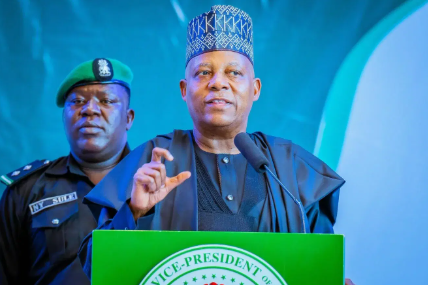
Speaking through Vice President Kashim Shettima at the Bauchi Investment Summit on Wednesday, the President said the country’s recent economic reforms have strengthened key sectors, increased non-oil revenues, and improved macroeconomic stability.
“Nigeria has moved past the phase of economic instability,” Tinubu said. “Our reforms have boosted non-oil revenue, improved our tax-to-GDP ratio, and raised external reserves to $43 billion. The foundation for sustainable growth is now firm.”
The President assured investors that Nigeria’s economy is ripe for business, emphasizing that collaboration among federal, state, and private sector is crucial to sustaining growth and creating jobs.
Vice President Shettima also urged state governments to prioritize partnership, innovation, and investment-friendly policies, noting that economic transformation requires unity of purpose and collective action.
He reiterated that the administration’s Renewed Hope Agenda remains focused on food security, industrial value chains, and regional development, which he described as the backbone of Nigeria’s long-term stability and prosperity.
“Our national priorities depend on shared progress. No state can thrive in isolation, our collective development must be anchored on cooperation and good governance,” Shettima said.
Former President Olusegun Obasanjo, the Sultan of Sokoto, Alhaji Muhammadu Sa’ad Abubakar III, and other dignitaries at the summit commended the federal government’s economic direction but urged genuine implementation of policy resolutions.
They stressed that sustained progress will depend on tackling insecurity, improving infrastructure, and ensuring transparent governance, which they identified as critical to attracting foreign and domestic investment.
The Bauchi Investment Summit, themed “Unlocking Regional Potential for National Prosperity,” brought together policymakers, business leaders, and development partners to explore strategies for driving inclusive growth across Nigeria’s regions.