In a decisive push to confront insecurity at its roots, the Nigerian Government has graduated more than 7,000 Forest Guards under the Presidential Forest Guards Initiative, marking a new chapter in Nigeria’s internal security strategy.
The guards, drawn from seven frontline states, have completed an intensive three-month training programme and are set for immediate deployment across forested and hard-to-reach areas long exploited by bandits, kidnappers and terrorist groups.
The initiative, launched in May 2025 by President Bola Tinubu, reflects a growing recognition that Nigeria’s forests vast, porous and often under-policed have become critical battlegrounds in the fight against violent crime.
According to the Office of the National Security Adviser (ONSA), the project is designed as a coordinated intervention that blends local knowledge with national security oversight.
By recruiting guards who are indigenous to their local government areas, the government aims to harness terrain familiarity, community trust and grassroots intelligence assets often lacking in conventional security operations.
Beyond physical endurance drills, obstacle navigation and long-range patrol simulations, trainees were immersed in tactical fieldcraft: movement techniques, ambush response, rescue missions and coordinated offensive actions. Yet the programme was not solely about combat readiness. Environmental conservation principles were woven into the curriculum, positioning the Forest Guards as protectors of both people and natural resources.
This dual focus reflects an understanding that illegal logging, mining and environmental degradation are often intertwined with criminal networks operating deep within forest corridors.
Human rights, International Humanitarian Law, gender rights and civilian protection formed core components of the training. Arms handling and use-of-force protocols were strictly regulated under a jointly agreed Arms Management Manual, reinforcing accountability and lawful engagement.
Out of all participants, the programme recorded a 98.2 percent completion rate, with a small number disqualified on disciplinary grounds and two fatalities linked to pre-existing medical conditions, figures that highlight both the programme’s demands and its overall success.
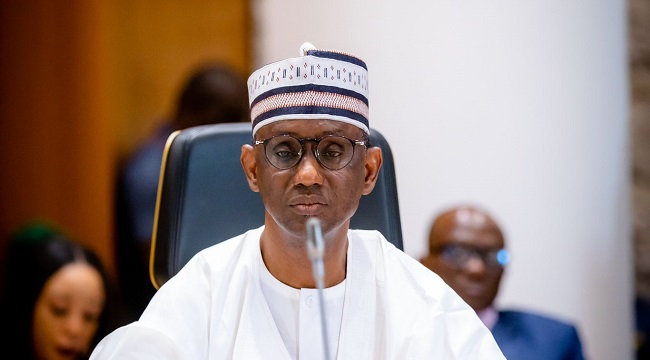
Speaking at the ceremonies, National Security Adviser Nuhu Ribadu described the Forest Guards as more than just another uniformed unit. He framed them as first responders and community protectors who will hold territory, gather intelligence and support existing security agencies in reclaiming spaces previously surrendered to criminal elements.
Ribadu confirmed that deployment would begin immediately, with salaries and allowances commencing without delay, an assurance aimed at sustaining morale and operational momentum.
Institutionally, the Forest Guard initiative stands out for its inter-agency design. While strategically guided by the NSA, it brings together the Federal Ministry of Environment, the Department of State Services, the National Park Service, and operational inputs from the Defence Headquarters, Armed Forces, Police and Civil Defence Corps. This layered collaboration seeks to avoid duplication, ensure unity of command and strengthen effectiveness on the ground.
As governors and deputy governors from the participating states looked on, the message from Abuja was clear: securing Nigeria’s forests is inseparable from securing its people.
With plans to expand the initiative nationwide, the graduation of these 7,000 Forest Guards represents both a symbolic and practical step, one that signals a shift toward sustained territorial control, community-anchored security and a long-term strategy to deny criminals the cover of Nigeria’s vast wilderness.