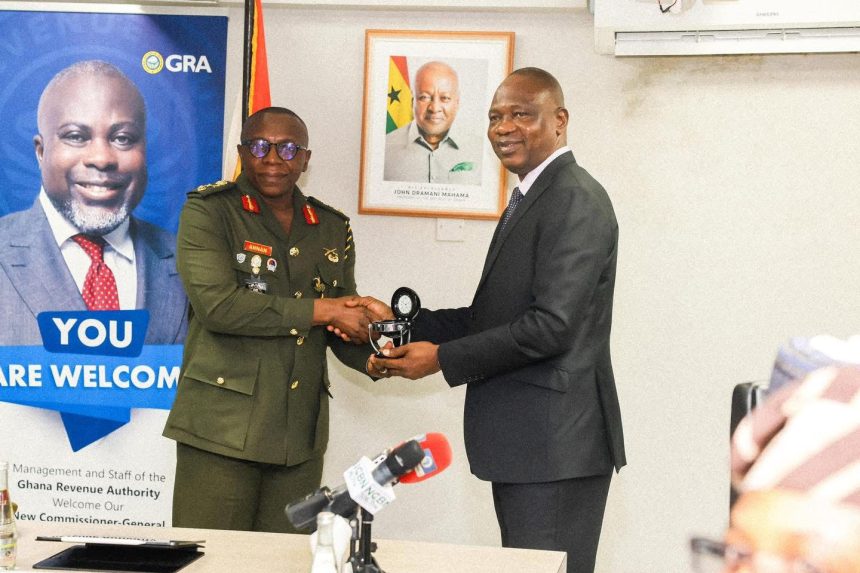
The Nigeria Customs Service (NCS) and the Customs Division of the Ghana Revenue Authority (GRA) have agreed to strengthen bilateral cooperation in combating illicit trade and promoting regional economic integration under the African Continental Free Trade Area (AfCFTA).
The Comptroller-General of Customs, Adewale Adeniyi, disclosed this during a high-level meeting with the Commissioner-General of the GRA Customs Division, Brigadier General Glover Annan, on Monday, November 3, 2025, at the Authority’s headquarters in Accra, Ghana.
Both agencies emphasized the need for intelligence sharing, harmonised border procedures, and joint enforcement operations as key measures to curb transnational crimes and improve legitimate trade between Nigeria and Ghana.
Brig.-Gen. Annan praised the Nigeria Customs Service for its leadership in driving customs reforms across Africa and commended the ongoing Customs-Partnership for African Cooperation in Trade (C-PACT) initiative developed by the NCS in partnership with Afreximbank and the World Customs Organisation (WCO).
Read Also: Customs, AfCFTA Strengthen Partnership to Boost Intra-African Trade
He noted that the upcoming C-PACT Conference scheduled for November 17–19, 2025, in Abuja would create a platform for continental dialogue on trade transparency and economic growth.
In his remarks, CGC Adeniyi said transnational criminal networks were exploiting operational gaps among Customs administrations to facilitate smuggling and illicit trade, stressing the need for stronger cross-border coordination.
“We must bridge the gaps between our administrations because these are the same weaknesses that transnational criminals exploit. The more we work together, exchanging intelligence and building capacity, the stronger we will be against these syndicates,” Adeniyi said.
He also called for a review of the 2001 Nigeria-Ghana Customs Cooperation Agreement to reflect new realities under the AfCFTA and proposed fresh areas of collaboration focused on technology-driven trade facilitation and regional economic expansion.
The engagement, officials said, will pave the way for a renewed bilateral framework anchored on intelligence-led enforcement, coordinated border management, and trade modernisation across West Africa.