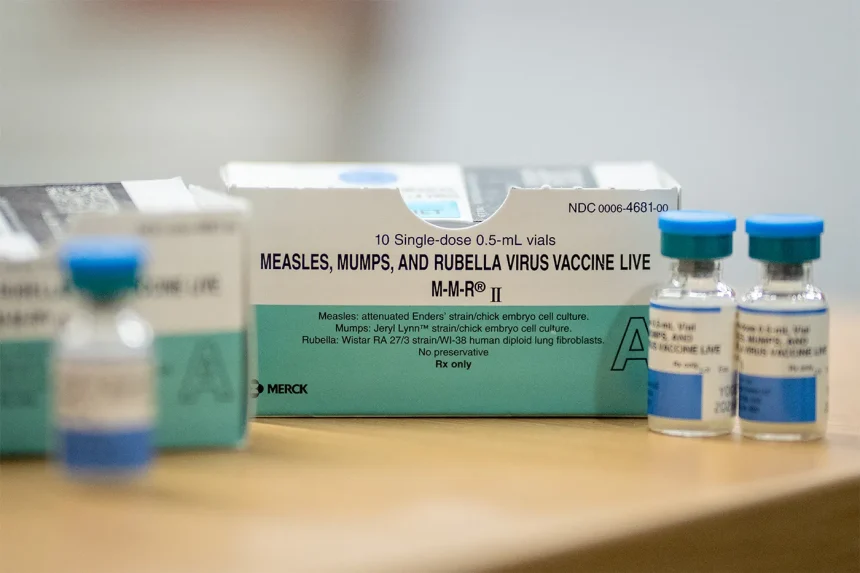
The Federal Government has launched one of its largest-ever vaccination drives, targeting over 16 million children with the Measles-Rubella vaccine. Backed by WHO, UNICEF, and Gavi, the campaign is set to protect millions against preventable diseases, reduce child mortality, and strengthen Nigeria’s immunisation system.
The Federal Government on Monday kicked off a large-scale measles-rubella vaccination campaign, mobilising states, international partners and frontline health workers in what officials describe as a once-in-a-generation push to close immunity gaps among children.
The integrated drive which also includes polio vaccination and school-age immunisation activities aims to reach millions of children across the country and strengthen routine immunisation for the long term.
Health authorities say the campaign is designed to reach children aged 9 months to 14 years with the measles-rubella vaccine, while delivering other essential vaccines and catch-up services in hard-to-reach and low-coverage communities.
“This is going to be one of the biggest public health interventions in our history,” a UNICEF health manager working in Nigeria said ahead of the roll-out. “The rollout will give Nigerian children a dose of measles-rubella vaccine and protect them from two killer diseases.”
What the Campaign Will Do
Officials describe the exercise as an integrated, multi-partner campaign with several components:
Primary target group: Children aged 9 months to 14 years for measles-rubella vaccination; younger children (under 5) will receive polio vaccines where applicable.
Phased implementation: The nationwide drive is being implemented in phases so states can manage logistics and cold-chain requirements.
Integration: The campaign combines measles-rubella with routine immunisation catch-ups, enhancements to the “second year of life” schedule, and targeted delivery of HPV vaccine for eligible girls aged 9 in selected states.
Partners: The National Primary Health Care Development Agency (NPHCDA) is leading the operation with technical and financial support from WHO, UNICEF, Gavi (the Vaccine Alliance) and state health ministries.
Coverage goal: The Federal Government has set an ambitious target of at least 90–95% coverage in participating areas to close immunity gaps and reduce outbreaks.
Several states have published their own targets and timetables, reflecting the scale of the exercise:
Kano State announced plans to reach more than 7.8 million eligible children in its campaign window.
Katsina, Nasarawa, Taraba, and Kaduna have released state-level targets and operational timetables to vaccinate millions within designated 7–10 day campaign windows.
These subnational targets feed into the national tally and demonstrate the campaign’s breadth across urban and rural communities.
Why the Campaign Matters
Measles remains a major killer of young children in Nigeria, and rubella, if contracted by pregnant women can cause Congenital Rubella Syndrome (CRS), leading to stillbirths and lifelong disabilities.
Health experts say that combining measles and rubella vaccination in a single campaign is the fastest way to close immunity gaps left by years of inconsistent routine immunisation coverage.
“Large-scale catch-ups are necessary where routine services have left children unprotected,” said a senior official at NPHCDA. “The aim is not just a one-off campaign but to strengthen systems so gains persist.”
Understanding Measles and Rubella
Measles is a highly contagious viral disease spread through coughing and sneezing. It can cause severe complications such as pneumonia, diarrhoea, brain infection (encephalitis), blindness, and death particularly in undernourished children or those with weak immune systems. According to the World Health Organization (WHO), measles remains one of the leading causes of vaccine-preventable deaths worldwide, despite the availability of a safe and effective vaccine.
Rubella, also known as German measles, is usually a mild viral infection in children but can have devastating effects if a woman contracts it during pregnancy. The virus can cause Congenital Rubella Syndrome (CRS), leading to severe birth defects such as heart problems, deafness, and intellectual disabilities. The rubella vaccine, combined with measles (as MR or MMR), offers long-term protection against both viruses and helps eliminate CRS.
Nigeria’s integration of rubella vaccination into the national immunisation schedule represents a crucial step toward meeting WHO’s goal of eliminating measles and rubella by 2030.
Challenges Ahead
Despite the scale and goodwill behind the campaign, major hurdles remain:
Cold-chain and logistics: Delivering and maintaining vaccine cold-chain integrity across conflict-affected or hard-to-reach areas remains complex and costly.
Vaccine hesitancy and misinformation: Authorities are preparing communication drives and engaging local religious and traditional leaders to counter false claims and encourage uptake.
Security: Insecurity in some northern and Middle Belt communities could hinder vaccination teams’ access and pose risks to staff.
Sustainability: Converting campaign gains into routine immunisation coverage will require continuous funding, health-worker retention and reliable supply chains.
To address hesitancy, state teams will deploy non-compliance resolution units and work with community influencers. Health officials emphasise that vaccines used in the campaign are safe and free to recipients.
If successful, the campaign could mark a turning point for Nigeria’s efforts to eliminate measles and significantly reduce rubella and CRS cases by 2030. Authorities say the initiative will also leave a legacy of improved cold-chain capacity, trained vaccinators, stronger data systems, and renewed community trust in immunisation services.
For parents and caregivers, the immediate message is simple: ensure eligible children receive the jab when teams visit schools, clinics, and outreach posts. For policymakers and partners, the real test will be translating this concentrated effort into sustained routine coverage so that future generations remain protected.