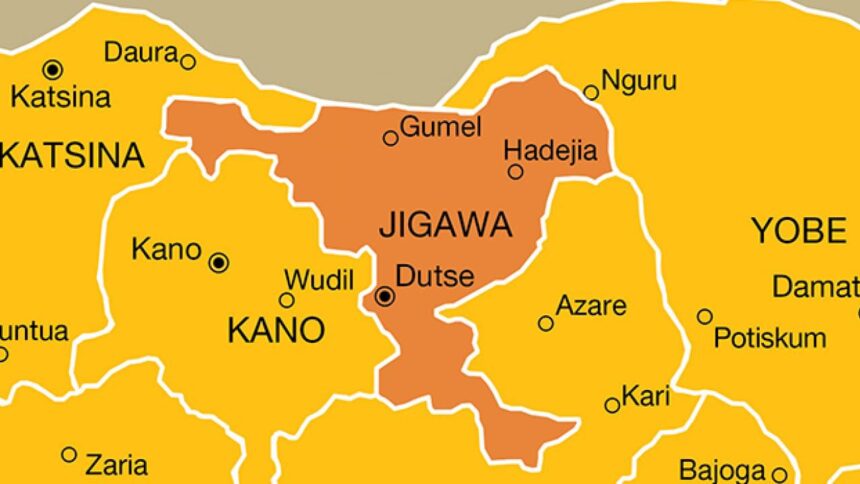
Jigawa State has vaccinated over 2.6 million children under the age of five in its latest polio immunisation campaign, exceeding its target with an impressive 116 per cent coverage.
The milestone highlights ongoing efforts to keep Nigeria free from the spread of polio, a disease that primarily affects young children and can lead to lifelong paralysis.
The State Health Information Officer of the Jigawa State Primary Health Care Development Agency, Shehu Ibrahim, disclosed the figures during a media and stakeholders’ engagement held in Dutse.
According to him, the March round of the campaign successfully reached children across all 27 local government areas in the state.
He noted that the high turnout reflects improved coordination and stronger community participation during the exercise.
Despite the success, officials recorded 5,551 cases of non-compliance during the campaign.
However, health teams resolved more than 4,000 of these cases through targeted community engagement and sensitisation.
Only 472 cases remained unresolved at the end of the exercise, indicating significant progress in addressing vaccine hesitancy.
Challenges in Social Mobilisation
Ibrahim identified six local government areas—Auyo, Babura, Birnin Kudu, Malam-Madori, Ringim, and Gwiwa—as having weaker social mobilisation.
He explained that these areas require stronger awareness campaigns to improve participation in future immunisation drives.
The agency’s Executive Secretary, represented by the Director of Public Health, Muhammad Abdullah, praised health workers and development partners for the achievement.
He stressed that sustained effort is critical to maintaining a polio-free status.
“We cannot afford to relent. Every child must be reached if we are to keep Jigawa and Nigeria polio-free,” he said.
Officials also highlighted the importance of media collaboration in combating misinformation about vaccines.
The Deputy State Immunisation Officer, Ashiru Ma’azu, said the engagement aimed to strengthen partnerships with journalists.
He noted that accurate reporting and early sensitisation could further improve vaccination coverage.
Similarly, Health Education Officer Sani Yusuf urged the media to use its influence to promote trust in immunisation programmes.
“The media shapes public opinion. We need you to tell parents that vaccines are safe and free,” he said.
A representative of the World Health Organization (WHO), Adamu Isa, also attended the meeting, underscoring international support for Nigeria’s immunisation efforts.
The campaign also received technical backing from the UNICEF Kano Field Office.
Participants agreed that continuous media engagement and community outreach are essential to addressing the remaining gaps.
They emphasised that reaching every child, especially in rural and hard-to-reach areas, remains the top priority.
Ultimately, the success of the campaign reinforces the importance of collective action in protecting children and sustaining public health gains.