The Academic Staff Union of Universities (ASUU) has once again called on the Federal Government to prioritize increased funding for public universities, warning that underfunding continues to threaten the quality of education and stability in the tertiary education system.
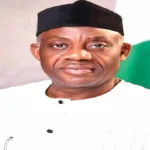
Speaking at a press briefing in Abuja, ASUU President Professor Emmanuel Osodeke said the government’s failure to address long-standing issues such as poor infrastructure, unpaid allowances, and delayed renegotiation of agreements has made it difficult for universities to function effectively.
He stated, “The only sustainable way to end the recurring crisis in Nigerian universities is for the Federal Government to show genuine commitment to education by substantially increasing funding and fulfilling all agreements reached with ASUU.”
ASUU’s strike and the question of renewed hope in nigerian education
Osodeke lamented that despite numerous promises from successive administrations, the government has consistently failed to implement the 2009 ASUU-FG Agreement and the subsequent Memorandum of Action (MoA), both of which outlined frameworks for improving lecturers’ welfare, revitalizing university facilities, and ensuring academic stability.
“The government must understand that strikes are symptoms of neglect, not the cause of instability,” he added. “If universities are well-funded and lecturers are treated with respect, there will be no reason to embark on industrial action.”
FG threatens ‘No Work, No Pay’ rule on ASUU
The ASUU president also called for transparency in the disbursement of the Tertiary Education Trust Fund (TETFund), urging that the resources be directed strictly toward improving research facilities, staff development, and campus infrastructure.
He criticized the rising trend of political interference in university administration, saying it undermines the autonomy of the institutions and affects academic freedom.
According to him, “University autonomy is central to academic excellence. Once politics begins to dictate who becomes a vice-chancellor or how funds are allocated, the system loses its integrity.”
The National Association of Nigerian Students (NANS) backed ASUU’s call, stressing that improved funding is essential to stop the endless cycle of strikes that have disrupted academic calendars for years.
A student leader, Comrade Akinola Wasiu, said, “Every time ASUU goes on strike, students suffer the most. The government must listen and act. We need a long-term solution, not temporary promises.”
Education policy analysts have also urged the government to explore public-private partnerships (PPPs) and dedicated education intervention funds as alternative ways to boost university financing without increasing tuition fees.
A senior official in the Federal Ministry of Education, who spoke on condition of anonymity, said the ministry is already reviewing the funding structure of federal universities. He revealed that a new proposal aimed at addressing recurrent salary delays, infrastructure gaps, and research funding has been submitted to the Federal Executive Council (FEC) for approval.
He said, “The government acknowledges ASUU’s concerns. Discussions are ongoing to ensure a lasting solution to industrial disputes and to improve the overall learning environment in public universities.”
ASUU, however, insisted that unless concrete steps are taken, the union might consider “other lawful actions” to press home its demands.
Education experts have warned that if the funding crisis is not resolved, Nigeria risks producing graduates who are ill-equipped to compete in the global knowledge economy.
“The government must choose between investing in education now or paying the price of neglect later,” Professor Osodeke concluded.