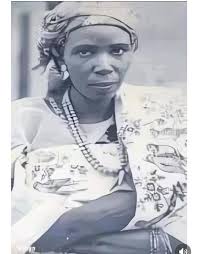
In the rich and often turbulent pages of Nigeria’s history, certain names stand out not just for their leadership or influence but for their courage and humanity. One such name is Hafsatu Bello, the wife of Sir Ahmadu Bello, the Sardauna of Sokoto and Premier of Northern Nigeria.
She was not a soldier, not a political figure, and not a person of power. Yet, on the dark morning of January 15, 1966, when Nigeria was plunged into its first military coup, Hafsatu Bello displayed a rare kind of bravery one that turned love into a shield and loyalty into an immortal story of sacrifice.
That night, the silence of Kaduna was broken by the sharp echo of gunfire. It was a night that would change Nigeria forever the beginning of a bloody military coup led by Major Chukwuma Kaduna Nzeogwu and other young officers, including Captain Emmanuel Nwobosi, Lieutenant Timothy Onwuatuegwu, and Sergeant Ako Nwankwo. Their mission was to overthrow the democratic government and eliminate key political leaders across the country.
In the quiet home of Sir Ahmadu Bello, the Sardauna of Sokoto, the revered northern leader was deep in prayer. Outside, confusion and fear spread through Kaduna as soldiers advanced, leaving behind a trail of chaos. Inside his residence, the calm voice of the Sardauna rose in prayer a man of faith facing fate with composure.
His wife, Hafsatu Bello, sensed the danger closing in. She heard the gunfire drawing nearer, the shouts of soldiers, and the hurried footsteps of aides and guards. But instead of fleeing or hiding, she stayed by her husband’s side. When he rose from his prayer mat, he looked at his family with quiet resolve and said, “They have come for me.”
It was not a statement of fear, but of acceptance the words of a man who knew that his time had come.
Hafsatu looked at him, her heart breaking, but her resolve unshaken. She took his hand and whispered words that would become eternal in Nigerian memory:
“If death will come, we will die together, my dear husband.”
Moments later, soldiers stormed the compound. The sound of boots and gunmetal filled the air as the attackers shouted orders and demanded the Sardauna’s surrender. In that split second, as the lamps flickered and the atmosphere grew tense, Hafsatu Bello did what no one expected she stepped in front of her husband, placing her body between him and the approaching soldiers.
When the bullets were fired, she was the first to fall. Her body absorbed the shots meant for her husband. The Sardauna fell soon after two lives ended within moments, their blood uniting on the cold floor of their home.
By dawn, the couple lay side by side husband and wife, leader and companion, bound together in death as they had been in life.
The coup that claimed their lives marked a dark chapter in Nigeria’s political history. It led to the fall of the First Republic, the emergence of military rule, and years of instability that would shape the nation for decades. But amid the chaos and bloodshed of that period, one story stood apart the story of Hafsatu Bello, a woman whose love defied fear and whose sacrifice became a symbol of eternal devotion.
Hafsatu’s courage was not the kind found on battlefields or political stages. It was the courage of the heart the quiet strength of a woman who believed that love and loyalty were worth dying for. Her actions that night remind Nigerians that behind every great leader, there often stands a partner of equal strength, even if history sometimes forgets their name.
Today, as Nigeria reflects on its complex past, the memory of Hafsatu Bello remains a shining light. Historians and admirers continue to recount how her act of bravery transformed a moment of tragedy into a timeless tale of love. She has become a symbol not just of loyalty to her husband but also of the kind of selflessness and courage that defined an era.
Her story is told in homes, schools, and history circles as a lesson in patriotism, devotion, and the enduring power of love. To many, Hafsatu represents the unseen heroes of Nigeria’s past the women who stood firm in moments of crisis, often paying the ultimate price for their principles.
The assassination of Sir Ahmadu Bello and Hafsatu Bello marked the end of an era in Northern Nigeria’s political and cultural life. The Sardauna’s leadership had shaped education, governance, and unity across the region. But his wife’s sacrifice added a human depth to that legacy showing that even in the face of violence and political chaos, love could still be an act of heroism.
Nearly six decades later, their story continues to inspire generations. Streets, schools, and cultural foundations bear the name of the Sardauna, but those who know the true depth of his legacy never forget Hafsatu the woman who loved so fiercely that she met death with open arms.
As Nigerians remember the night of January 15, 1966, they also remember the woman who faced death not as a victim, but as a guardian one whose final act was not of fear, but of love.
That night, love stood its ground.
And its name was Hafsatu Bello.