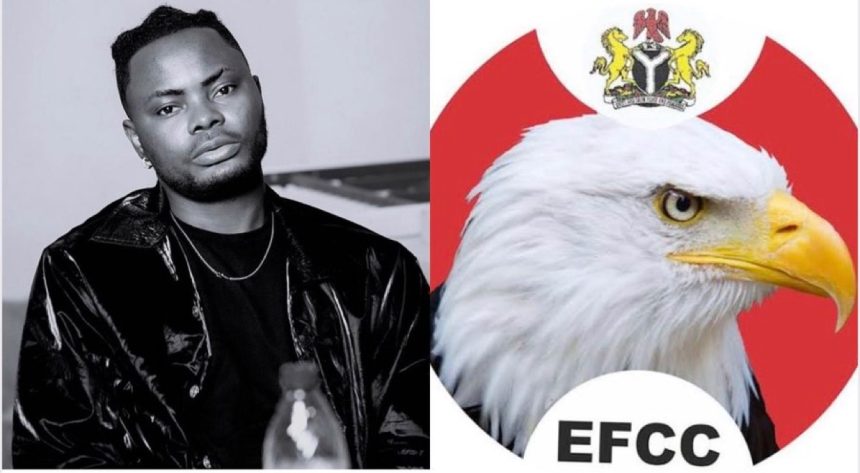
The Economic and Financial Crimes Commission (EFCC) has suspended several of its operatives allegedly involved in the reported extortion of popular Nigerian rapper Oladipupo Oladimeji, better known as Oladips, to the tune of ₦10 million. The move follows widespread public outrage after the artist accused some EFCC officials of unlawful detention and financial coercion.
In a statement released late Sunday by the Commission’s spokesperson, the EFCC said it had ordered an internal disciplinary process against the implicated officers and temporarily suspended them pending the outcome of investigations.
“The EFCC condemns all forms of misconduct among its personnel and reiterates its commitment to upholding professionalism, transparency, and accountability in its operations,” the statement read.
The agency further assured Nigerians that no official is above the law, and any operative found guilty of wrongdoing would face both administrative and legal consequences.
Oladips, known for his socially conscious lyrics and vibrant street music, alleged that EFCC operatives stormed his residence in Lagos, detained him without warrant, and coerced him into transferring ₦10 million to regain his freedom.
The artist took to social media to narrate his ordeal, sparking a flurry of reactions from fans, activists, and fellow entertainers demanding justice.
“They harassed me like a criminal and forced me to pay my own money. I’m not against the law, but I’m against abuse of power,” Oladips wrote on X.
The post quickly went viral, prompting the EFCC leadership to initiate an emergency inquiry.
Public Reactions and Industry Response
The Nigerian entertainment industry has since rallied around Oladips, calling for a broader investigation into alleged misconduct within the anti-graft agency.
Popular figures in the music and film sectors described the reported incident as a disturbing abuse of authority, urging the government to protect citizens from unlawful extortion in the guise of anti-corruption enforcement.
Civil rights groups, including the Socio-Economic Rights and Accountability Project (SERAP) and Enough Is Enough (EiE) Nigeria, have also demanded transparency in the disciplinary process and public disclosure of the officers’ identities once investigations are complete.
This incident comes amid the EFCC’s recent push to restore public trust following a series of similar allegations against some personnel.
The agency’s current chairman, Ola Olukoyede, has repeatedly emphasized his administration’s zero-tolerance policy toward corruption within the commission.
“We cannot fight corruption with corrupt individuals,” Olukoyede once said during a recent staff briefing in Abuja.
Analysts believe this case will test the EFCC’s institutional integrity. While the suspension of the accused officers is seen as a positive step, Nigerians are watching closely to see whether the agency will pursue prosecution or quietly reinstate them after public attention fades.
For many, the Oladips case is more than just a celebrity story it reflects the ongoing struggle between accountability and impunity in Nigeria’s anti-corruption war.
As investigations continue, the EFCC’s next steps will determine whether it can maintain credibility in the eyes of Nigerians and the international community.
For now, the suspension serves as both a symbolic and cautionary measure, reminding all operatives that misconduct, no matter how minor or concealed, will not go unpunished.