By Aisha Muhammad Magaji
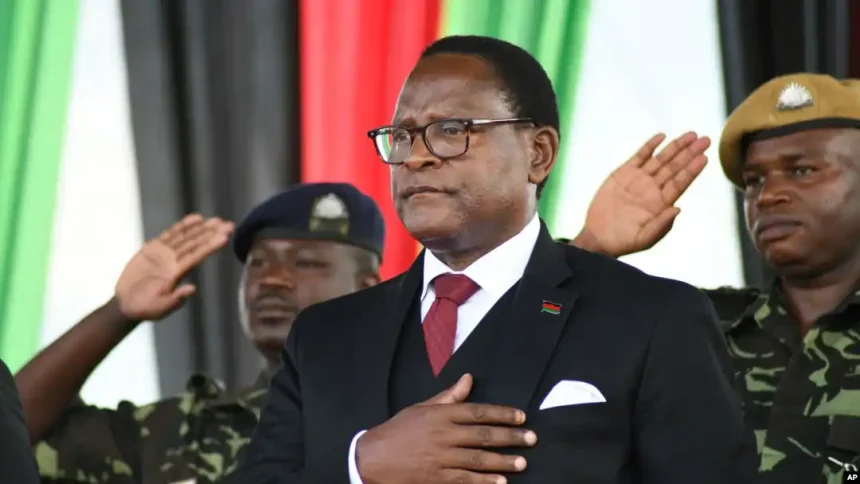
Malawi’s President Lazarus Chakwera has conceded defeat in the country’s just-concluded general elections, marking a pivotal moment in the nation’s democratic history and clearing the path for a peaceful transfer of power.
In a nationally televised address on Wednesday night, Chakwera acknowledged the results released by the Malawi Electoral Commission (MEC), which declared opposition leader [Name withheld pending official result confirmation] as the winner. He congratulated his rival and urged Malawians to rally behind the new leadership.
Chakwera said that although he had hoped for a different outcome, the people’s will must prevail. He emphasized that democracy is strengthened when leaders respect the verdict of the ballot box.
He told the nation: “I may have lost this election, but Malawi has won. The voice of the people is the voice of God, and I accept the decision with humility. I wish the president-elect every success as he leads our nation forward.”
Symbol of Democratic Maturity
Chakwera’s concession is significant, given the country’s political trajectory. In 2020, he rose to power after Malawi’s Constitutional Court annulled a disputed election and ordered a rerun a rare and celebrated moment in African politics. His peaceful acceptance of defeat in 2025 is now being hailed as another milestone for the country’s democratic journey.
Political analysts say this gesture enhances Malawi’s reputation as one of Africa’s most resilient democracies, in a region often plagued by electoral disputes and protracted transitions.
Local and International Praise
Election observers from the African Union (AU), the Southern African Development Community (SADC), and the European Union (EU) praised both the electoral process and Chakwera’s decision to concede. They noted that transparency at the polls, coupled with swift acceptance of results, will go a long way in maintaining political stability.
The United Nations Secretary-General also issued a statement commending Malawians for their commitment to democracy and urging the incoming government to build on the country’s democratic gains.
Across the region, African leaders sent congratulatory messages to Malawi, with many describing Chakwera’s concession as an act of statesmanship.
Citizens React
In cities like Blantyre and Lilongwe, citizens gathered in public squares to follow the announcement. Some expressed disappointment at Chakwera’s loss, while others said his graceful exit restores hope in leadership accountability.
“This is the Malawi we want where leaders know power belongs to the people,” said Grace Moyo, a 32-year-old entrepreneur in Lilongwe. “President Chakwera has set a standard for future leaders.”
Transition and Challenges Ahead
Preparations are underway for the inauguration of the president-elect in the capital. The new administration is expected to face immediate challenges, including tackling inflation, improving agricultural productivity, and addressing persistent energy shortages.
Analysts warn that expectations will be high, as Malawians look for urgent solutions to economic hardship. However, the peaceful transition offers a strong platform for governance reforms and renewed national unity.
A Legacy of Service
For Chakwera, who campaigned in 2020 on a message of change and anti-corruption, his legacy may now be defined as much by his exit as by his entry into power. By choosing to concede gracefully, he has underscored the importance of democratic principles over personal ambition.
As one political commentator noted: “Chakwera’s speech may have ended his presidency, but it strengthened Malawi’s democracy.”