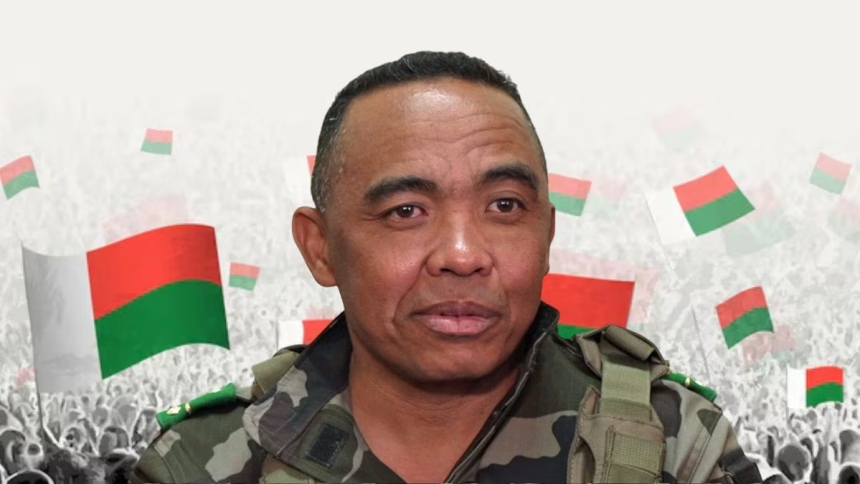
In a dramatic turn of political events, Colonel Michael Randrianirina, a senior officer in Madagascar’s elite CAPSAT military unit, has officially been sworn in as the new President of Madagascar, following a swift military takeover that ousted former leader Andry Rajoelina.
The ceremony, which took place on October 17, 2025, at the High Constitutional Court in Antananarivo, came just days after the army announced the dissolution of state institutions, citing the need to restore order and stability after weeks of nationwide protests.
Witnesses at the event said Randrianirina, flanked by top military officers, took the oath of office amid tight security and the presence of select government officials, diplomats, and journalists.
OpenAI Chooses UNILAG as Home for Its First African AI Academy
During his inaugural address, Colonel Randrianirina vowed to “safeguard national unity, protect the rights of every citizen, and steer the country toward a new era of stability.” He also pledged to establish a transitional government that would include both military and civilian representatives, with general elections expected within 18 to 24 months.
The colonel’s rise to power followed weeks of youth-led protests that rocked major cities across Madagascar. Demonstrators had accused the Rajoelina administration of corruption, poor governance, and economic mismanagement. The unrest intensified after persistent electricity shortages, high inflation, and reports of political repression.
Troops Dismantle 7 Illegal Refinery Sites, Foil Oil Theft Worth Over ₦98 Million in Niger Delta
Sources said that after the protests spiraled out of control, the military stepped in to “restore calm,” leading to the resignation and reported flight of President Rajoelina. Lawmakers later confirmed his impeachment, paving the way for the military to take charge.
The High Constitutional Court ratified Randrianirina’s presidency, describing it as a temporary measure “to maintain state continuity and ensure peace.”
The development has drawn sharp reactions both locally and internationally.
The African Union (AU) swiftly suspended Madagascar’s membership, condemning the military’s seizure of power and demanding a quick return to democratic governance.
In a statement, UN Secretary-General António Guterres expressed concern over the events in Madagascar, urging all parties to “exercise restraint and commit to dialogue for the restoration of constitutional order.”
However, within Madagascar, public sentiment remains divided. While many young citizens and activists have celebrated the military’s intervention as a necessary move to end decades of misrule, others fear that the new leadership could entrench military dominance and delay a return to democracy.
Civil society groups have called for transparency in the transitional process and warned that international isolation could worsen the country’s fragile economy if constitutional order is not quickly restored.
Madagascar an island nation of about 30 million people has faced repeated political crises since gaining independence from France in 1960. This latest upheaval marks yet another power shift driven by popular discontent and institutional fragility.
Experts say Randrianirina’s government faces a daunting task: stabilizing the economy, restoring investor confidence, and rebuilding trust in public institutions while navigating complex diplomatic pressures.
As the new president settles into office, the world will be watching closely to see whether his promises of reform, national unity, and early elections will materialize or if Madagascar will once again slip into the cycle of political uncertainty that has defined much of its post-independence history.