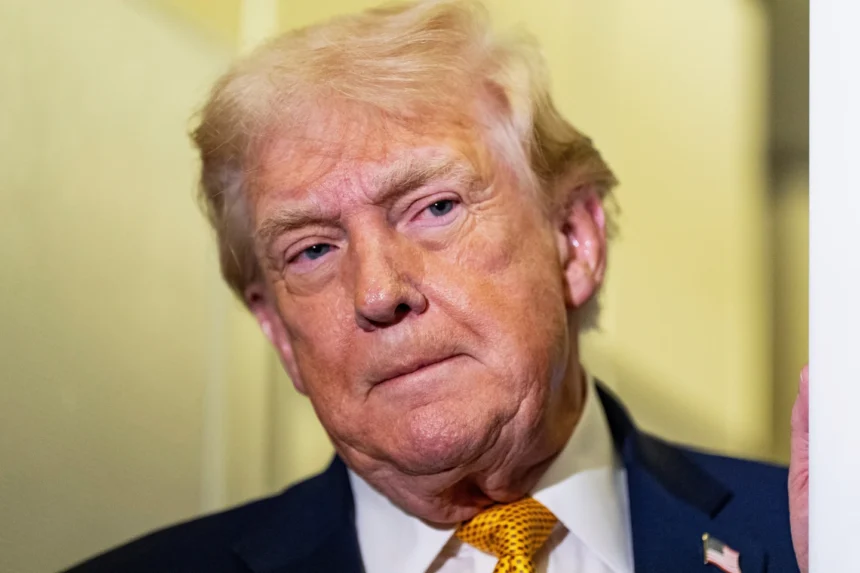
Donald Trump recently made headlines with what some are calling a “sudden reversal” in his remarks on the violence in Nigeria. In an interview covered by Tribune Online, Trump acknowledged that Muslims, as well as Christians, are being killed in Nigeria’s ongoing conflicts. This marks a subtle shift from his earlier statements, where he had emphasized attacks on Christians, warning of what he described as “Christian genocide” and even hinting at possible U.S. intervention.
The change isn’t so much a reversal of policy as it is an adjustment in rhetoric. Previously, Trump and his allies highlighted Christian victimhood almost exclusively. In his latest comments, he broadened the narrative to recognize Muslim victims as well, though he still stresses that Christians are killed “mostly.” This appears to be a tactical effort to acknowledge the full scope of the violence while maintaining the focus on Christian suffering that resonates with his political base.
Understanding the context helps explain why this adjustment matters. Nigeria has faced years of complex security challenges, including insurgent attacks by groups like Boko Haram and ISWAP in the northeast, violent clashes between farmers and herders in the Middle Belt, and widespread banditry and kidnappings. Analysts emphasize that these attacks target civilians of all faiths. Data from local monitoring suggests that both Muslims and Christians have suffered casualties, and in some areas, Muslims have even been disproportionately affected.
This makes Trump’s latest phrasing more of a refinement than a policy U-turn. He is now publicly acknowledging a reality that analysts and Nigerian authorities have long stressed: the violence is not purely religious and victims include Muslims as well. However, his underlying approach remains consistent. He continues to highlight threats to Christians and has not ruled out further U.S. strikes should the violence persist.
Several factors likely explain this rhetorical shift. Domestic political pressure from supporters emphasizing Christian victimhood played a role, as did the undeniable reality on the ground that attacks affect people of all faiths. International considerations also matter; Nigeria’s leaders have rejected the genocide label, and a strictly one-sided framing drew diplomatic pushback.
Trump’s statements shows a nuanced adjustment. He is softening the earlier one-sided emphasis on Christians to acknowledge Muslim victims, but the broader policy stance, focusing on Christian suffering and the potential for U.S. action remains unchanged.