
The House of Representatives has launched an investigation into alleged discrepancies in Nigeria’s newly signed tax reform laws, amid mounting opposition pressure and calls by the Peoples Democratic Party (PDP) for the suspension of the January 1, 2026 implementation date.
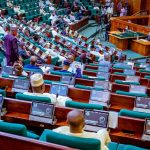
On Thursday, the House constituted a seven-man ad hoc committee to probe claims that provisions contained in the officially gazetted tax laws differ from what was passed by the National Assembly, raising concerns about legality, transparency, and legislative integrity.
The move came as the PDP demanded that the Federal Government shift the take-off date of the new tax regime by an additional six months, citing what it described as illegal alterations to the laws and the need for broader public enlightenment.
The controversy was triggered on Wednesday when a PDP lawmaker representing Sokoto State, Abdussamad Dasuki, raised a point of order at plenary, alleging that the gazetted versions of the tax laws contained insertions and substitutions not approved by lawmakers.
Dasuki warned that if the discrepancies were not urgently addressed, the laws could become legally vulnerable, as they would lack proper legislative backing.
“I plead that all the documents should be brought before the Committee of the Whole so that we can make the relevant amendments,” Dasuki said.
“This is a breach of the Constitution and our laws, and this should not be taken lightly by this Honourable House.”
At the resumption of plenary on Thursday, Speaker Tajudeen Abbas underscored the gravity of the allegations, announcing the immediate constitution of an ad hoc committee to investigate the matter and report back to the House.
“On the revised tax laws, the House leadership has unanimously agreed that a committee should be set up immediately to look into the matters that were raised and many others,” Abbas said.
The committee is chaired by Mukhtar Betara, with members including Idris Wase, James Faleke, Sada Soli, Igariwey Iduma, Fredrick Agbedi, and Babajimi Benson.
Reacting to the development, the PDP commended Dasuki “for his fastidiousness and courage in the discharge of his legislative duties” and demanded that the Federal Government push the commencement date of the Tax Act beyond January 1, 2026.
In a statement on Thursday, the opposition party argued that a further six-month delay was necessary to allow for a thorough investigation of the alleged discrepancies and ensure adequate public sensitisation.
“The commencement date of the Tax Act must be shifted from January 1, 2026, for at least six months to allow sufficient time for the investigation of this anomaly,” the PDP said.
The party warned that the matter must not be treated with “customary levity,” insisting that Nigerians deserve clarity on how provisions not approved by lawmakers allegedly found their way into the gazetted laws.
“This criminal act of inserting unenacted sections into laws can erode public trust in parliamentary enactments,” the PDP stated.
“Nigerians deserve assurance that the laws they obey are those validly passed by their elected representatives, not provisions foreign to lawmakers.”
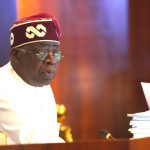
President Bola Ahmed Tinubu recently signed four landmark tax reform bills into law, which the Federal Government has described as the most comprehensive overhaul of Nigeria’s tax system in decades.
The laws include:
• Nigeria Tax Act
• Nigeria Tax Administration Act
• Nigeria Revenue Service (Establishment) Act
• Joint Revenue Board (Establishment) Act
Under the reforms, tax administration will operate under a unified authority, the Nigeria Revenue Service, with the aim of simplifying compliance, expanding the tax base, eliminating overlapping taxes, and modernising revenue collection across federal, state, and local governments.
The laws are scheduled to take effect on January 1, 2026, following a six-month transition period earmarked for public education and system alignment.
Beyond the PDP, resistance to the reforms has intensified. On Wednesday, the National Opposition Movement (NOM) demanded the immediate suspension of the tax plan, warning that its implementation would worsen the living conditions of Nigerians.
Addressing journalists at the Yar’Adua Centre, Abuja, NOM spokesperson Chille Igbawua said the new tax regime was “shocking” and “punitive,” especially at a time of widespread poverty, unemployment, and rising living costs.
“You cannot tax hunger. You cannot tax poverty. And you cannot tax people into prosperity,” Igbawua said.
“This is not tax reform; it is a weapon fashioned against the economic well-being and social security of suffering Nigerians.”
The Federal Government has, however, rejected claims that the tax reforms are anti-poor or punitive.
Speaking on Thursday during the inauguration of a Joint Committee of the National Orientation Agency (NOA) and the Presidential Committee on Fiscal Policy and Tax Reforms in Abuja, the Special Adviser to the President on Economic Affairs, Tope Fasua, accused some individuals of attempting to undermine the reforms.
“We must state clearly that this is a pro-poor policy — one designed to recalibrate the revenue of this country in a way that ensures the poorest Nigerians are not harmed, except positively,” Fasua said.
He stressed that the reforms were not designed to increase the tax burden on citizens or small businesses, citing infrastructure projects such as the partial opening of the Brass–Nembe Road as evidence of what improved revenue mobilisation can achieve.
Earlier, Taiwo Oyedele, Chairman of the Presidential Committee on Fiscal Policy and Tax Reforms, said misinformation had fuelled public anxiety, insisting the reforms were intended to ease, not worsen, economic pressure on Nigerians.
The Director-General of the NOA, Lanre Issa-Onilu, represented by Nura Kobi, Director of Planning, Research and Statistics, said the agency would deploy its 16 communication platforms across all 774 local government areas to address misconceptions surrounding the new tax laws.
“Across the world, public policies rarely fail because they are poorly designed; they fail because they are poorly communicated,” Issa-Onilu said.
“When the message is not understood, the messenger must return.”