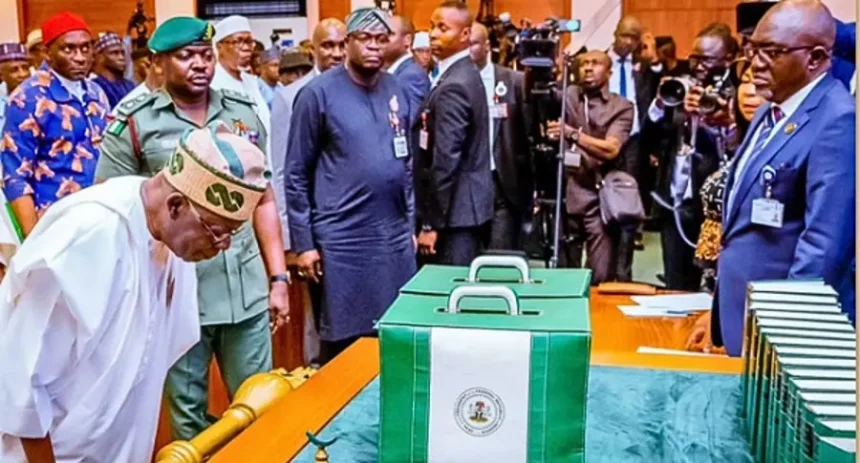
President Bola Ahmed Tinubu will on Friday present the 2026 Appropriation Bill to a joint session of the National Assembly, marking the formal commencement of Nigeria’s 2026 budget process.
The presentation, which will be delivered before members of the Senate and the House of Representatives, is expected to outline the Federal Government’s spending priorities, revenue projections and fiscal strategy for the 2026 financial year.
The event is a key constitutional requirement and one of the most anticipated moments in Nigeria’s annual legislative calendar.
The 2026 Appropriation Bill presentation provides the first official insight into how the Tinubu administration plans to allocate public funds amid ongoing economic reforms, revenue challenges and rising public expectations.
Lawmakers are expected to scrutinise the proposals closely, focusing on allocations to critical sectors including:
• security and defence,
• infrastructure development,
• education and healthcare,
• social welfare programmes,
• and economic diversification initiatives.
Observers say the 2026 budget is likely to reflect the administration’s emphasis on fiscal discipline, revenue expansion and economic stability. The government has repeatedly stated its commitment to reducing waste, improving transparency and ensuring that budgetary provisions translate into tangible development outcomes.
The budget presentation will also provide clarity on how the government intends to manage debt servicing obligations while sustaining capital expenditure.
Following the President’s address, the proposed 2026 Appropriation Bill will be transmitted to the National Assembly for detailed legislative consideration. Relevant committees in both chambers are expected to engage with ministries, departments and agencies (MDAs) during budget defence sessions.
Lawmakers will debate, amend where necessary and eventually pass the bill before it is returned to the President for assent.
The leadership of the National Assembly has assured Nigerians of a thorough but timely budget review process to ensure early implementation once the fiscal year begins.
Economists, civil society groups and the business community are keenly watching the 2026 budget process, especially against the backdrop of inflation, exchange rate pressures and calls for improved service delivery.
Many Nigerians are hoping the budget will address:
• job creation and youth empowerment,
• support for small and medium-scale enterprises,
• improved power supply and transportation,
• and targeted social interventions for vulnerable populations.
President Tinubu’s presentation of the 2026 Appropriation Bill to a joint session of the National Assembly represents a critical moment in shaping Nigeria’s economic and development agenda for the coming year.
As lawmakers prepare to debate the proposals, public attention will remain focused on whether the 2026 budget can balance fiscal responsibility with the urgent needs of citizens and the broader economy.