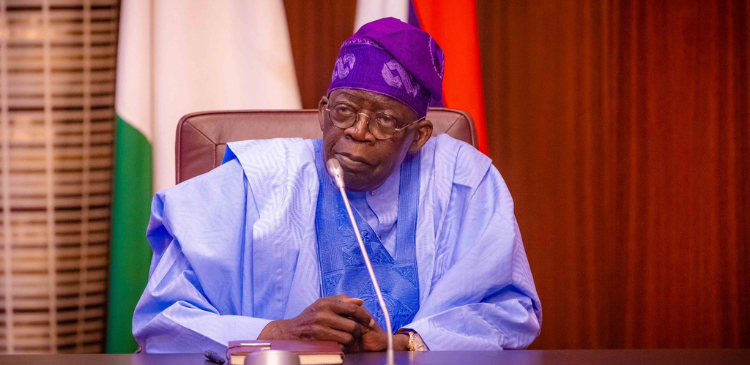
President Bola Ahmed Tinubu has formally asked the Senate to approve the deployment of Nigerian troops to Benin Republic in response to the country’s recent failed coup attempt, marking a major regional security intervention under the authority of ECOWAS and Nigeria’s constitutional provisions.
The request was conveyed to the Senate during Tuesday’s plenary session and has been forwarded to the Committee of the Whole for urgent consideration following rising tensions in Benin Republic and the appeal for support by President Patrice Talon.
The President said the deployment is necessary to stabilise the country, strengthen democratic institutions, and prevent further escalation after an attempted military takeover threatened regional peace. The move aligns with the security cooperation protocol of the Economic Community of West African States (ECOWAS) which Nigeria currently chairs and conforms with Section 30 (5) of the 1999 Constitution, which mandates presidential consultation with the National Defence Council before authorising such military missions.
Benin Republic experienced a sudden unconstitutional power grab attempt earlier this month, which was swiftly suppressed by loyalist forces. The incident prompted urgent deliberations among ECOWAS member states, with regional leaders expressing concern that another successful coup could further destabilise West Africa, following similar events in Niger, Burkina Faso, Mali and Guinea.
Nigeria had initially provided air support intervention, assisting Beninese authorities in containing the mutiny. According to presidency sources, ECOWAS has since recommended a limited peace-support deployment to help restore confidence, secure key state institutions and prevent the regrouping of coup plotters.
This development shapes the SEO keywords embedded in this report, such as regional security, ECOWAS peace mission, failed coup in Benin Republic, Tinubu troop deployment, and West African democratic stability.
Nigeria, as ECOWAS Chair, has taken a frontline role in addressing threats to democratic governance within the region. Diplomats say Benin’s president reached out directly to Tinubu, requesting immediate military cooperation to reinforce national security following the attempted power takeover.
Defence officials emphasise that the proposed deployment will not be a combat mission but a stabilisation and support operation, focusing on:
- securing vital government institutions,
- providing intelligence and logistical backing,
- assisting ECOWAS monitoring mechanisms,
- and reinforcing regional deterrence against coups.
The Defence Headquarters is expected to issue operational guidelines once the Senate grants approval.
Senate President Godswill Akpabio acknowledged receipt of the president’s letter and assured lawmakers that the request will receive immediate legislative scrutiny given the urgency of the situation.Lawmakers are expected to debate:
- the scope and duration of troop deployment,
- the operational rules of engagement,
- cost implications for Nigeria’s defence budget,
- and the level of ECOWAS involvement in financing and coordination.
Security analysts say the Senate’s decision will determine how quickly the mission can commence and how Nigeria balances its regional obligations with domestic security priorities.
If approved, the deployment will underscore Nigeria’s renewed assertiveness in safeguarding democracy across West Africa and will send a strong signal against the rising wave of coups in the sub-region. It also reaffirms Nigeria’s commitment to collective security, one of the pillars of ECOWAS’ founding protocol.
Diplomatic sources warn, however, that sustained regional cooperation and political stability in Benin will depend on broader governance reforms, economic support mechanisms and continuous monitoring to prevent future disturbances.
President Tinubu’s request marks a significant moment in Nigeria’s foreign policy posture, signalling a proactive stance against unconstitutional regime changes in West Africa. As the Senate prepares to deliberate, all eyes remain on how soon the mission will commence and what impact it will have on the broader push for democratic stability within the ECOWAS region.