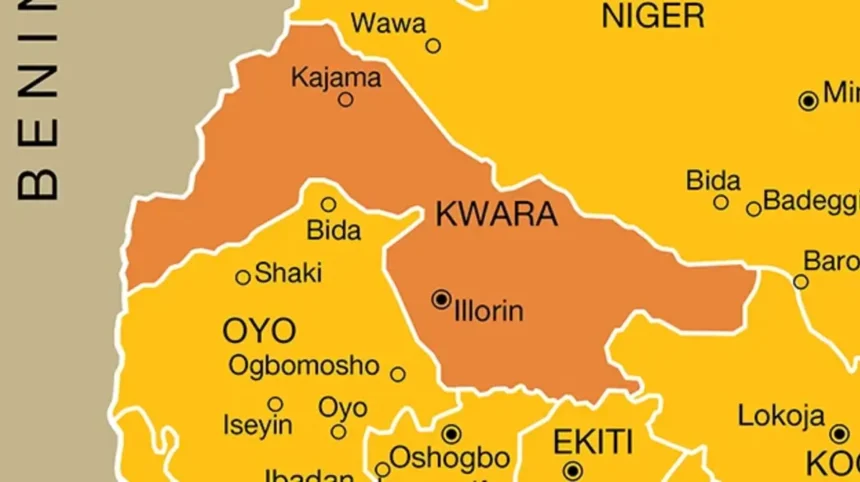
The attack on a church in Eruku, Kwara State, on November 18, 2025, has become another sobering reminder of Nigeria’s deteriorating security climate. Gunmen stormed the church during a service, killing at least two people and abducting the pastor along with several worshippers. Eyewitness video shows terrified congregants fleeing as the attackers entered, firing shots and seizing valuables. The Kwara State governor quickly deployed reinforcements, while early reports suggested more than 20 armed men, many of them on motorcycles and speaking Fulfulde, participated in the assault. Some accounts indicate that up to 15 worshippers may have been abducted.
The attack has rattled a state long considered relatively stable compared to Nigeria’s more volatile regions. But it is the timing of the incident that has intensified national concern.
A Nation Still Reeling From the Kebbi Schoolgirl Abductions
Just days earlier, Nigerians were still grappling with the abduction of 25 schoolgirls from the Government Girls Comprehensive Secondary School in Maga, Kebbi State. During that raid, gunmen exchanged fire with police before forcing their way into the school and killing the vice principal, Malam Hassan Makaku, who attempted to defend the students.
The attack revived painful memories of past mass kidnappings and highlighted a troubling reality: schools remain some of the most vulnerable targets in northern Nigeria. Combined with the Kwara church assault, the pattern points to armed groups operating with increasing confidence and tactical sophistication.
Political Alarm and Mounting Pressure on the Government
The rising tempo of violent incidents prompted the House of Representatives to schedule a full-day national security debate on November 18, an extraordinary step reflecting the gravity of the situation. Lawmakers’ urgency mirrors bleak assessments from security analysts, who reported that in June 2025 alone, 1,111 people were killed and 276 abducted nationwide. These numbers indicate that despite ongoing government strategies, from military deployments to community-level initiatives, violence remains widespread across multiple regions and fronts.
Underlying Forces Driving the Escalating Violence
Kwara’s geographical position, places it within the middle belt, where clashes between herder and farmer communities have evolved into deeper ethnic and religious conflicts. Reports that the attackers spoke Fulfulde suggest a possible link to militia groups that have been active across central Nigeria, although officials have not confirmed any affiliations.
In the northwest, where the Kebbi abduction occurred, kidnapping for ransom has become a lucrative enterprise. Armed groups with access to motorcycles, light weapons, and local networks carry out highly coordinated operations, often overwhelming lightly equipped local security formations.
Groups such as Boko Haram and ISWAP may not be directly involved in every attack, but their long-standing presence and operations have contributed to a climate of widespread instability. Their activities stretch security forces thin and embolden other violent actors who exploit the weakened policing environment.
Nigeria’s internal insecurity has also drawn global attention. Former U.S. President Donald Trump recently accused the country of systemic Christian persecution and even hinted at military intervention, comments that Nigerian officials rejected but which nonetheless shows the geopolitical scrutiny surrounding the crisis.
The Broader Implications for Nigeria’s Stability
Repeated attacks on schools, churches, and rural communities threaten to undermine public confidence in the ability of the state to provide basic protection. As sanctuaries once seen as safe havens come under siege, communities are left feeling increasingly abandoned.
Assaults on religious institutions, especially churches, risk inflaming sectarian tensions. In a diverse nation where identities often overlap with politics, such attacks can exacerbate already fragile relations between ethnic and religious groups.
With Parliament signaling alarm and local leaders demanding stronger federal intervention, pressure is mounting on the Tinubu administration to adopt more decisive and innovative security strategies. The coming months may determine whether the government can restore confidence or whether public frustration will continue to rise.
As the international community pays closer attention to Nigeria’s security challenges, the government must balance domestic realities with diplomatic sensitivities. Continued violence may affect foreign relations, investment confidence, and Nigeria’s broader image on the world stage.
The attack in Eruku, occurring so soon after the Kebbi school abduction, underscores a nation confronting multiple layers of insecurity at once. These events are not isolated tragedies, they are symptoms of a deeper structural crisis that spans geography, politics, identity, and governance.
Whether Nigeria can transform this moment of crisis into a turning point will depend on the resolve of its leaders, the effectiveness of its security reforms, and the resilience of its communities. The stakes could not be higher.