The Federal Government of Nigeria has expanded its collaboration with the Government and private sector of Germany to enhance Technical and Vocational Education and Training (TVET) and promote structured, legal labour migration pathways for Nigerian youths.
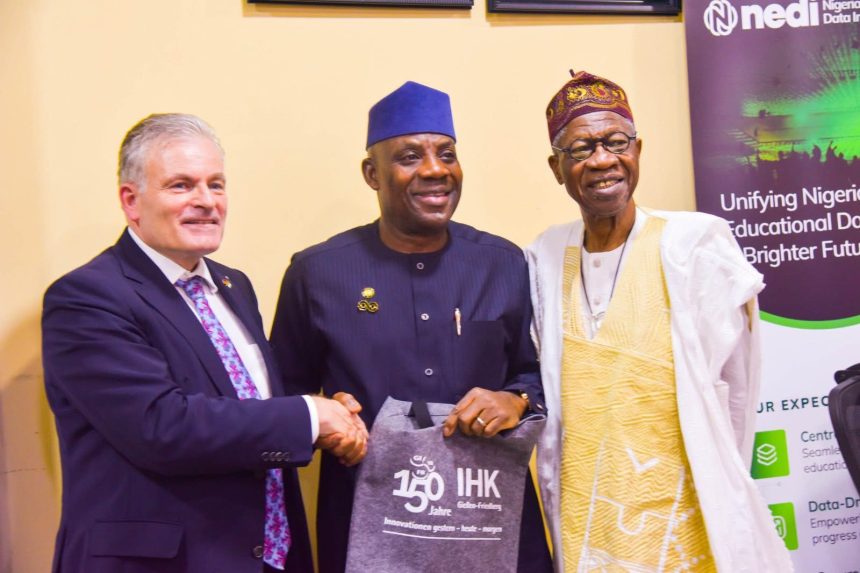
Speaking during a high-level meeting with the Delegation of German Industry and Commerce (AHK Nigeria), led by Dr. Matthias Leder, the Honourable Minister of Education, Chief (Dr.) Maruf Tunji Alausa, FAMedS, CON, said the partnership supports President Bola Ahmed Tinubu’s Renewed Hope Agenda, focused on youth empowerment, job creation, and skills-based education.
Dr. Alausa disclosed that the Ministry’s new TVET initiative provides six to twelve months of practical training for graduates and school leavers who lack employable skills.
The programme, implemented across Federal Technical Colleges nationwide, has already recorded a 400% increase in enrollment, underscoring the growing demand for technical education and hands-on learning.
He explained that the partnership with Germany aims to align Nigeria’s TVET system with global best practices by adopting Germany’s dual vocational training model, which integrates classroom instruction with industrial experience, ensuring Nigerian youths are equipped with internationally recognized certifications and competitive skills.
“Germany’s model of dual training remains one of the most effective systems in bridging the skills gap.
Through this collaboration, we are providing young Nigerians with opportunities to learn, earn, and contribute meaningfully to both the Nigerian and global economies,” Dr. Alausa said.
In his remarks, Dr. Matthias Leder reaffirmed Germany’s readiness to strengthen Nigeria’s vocational training ecosystem and develop structured, legal pathways for labour migration.
He emphasized that such cooperation would reduce irregular migration, enhance workforce productivity, and foster mutual growth between both nations.
Also speaking at the meeting, Alhaji Lai Mohammed commended the initiative, describing it as a reflection of the Minister’s vision to reposition education as a tool that combines theoretical knowledge with practical competencies.
Both parties agreed to establish a Joint Technical Working Group to coordinate implementation, harmonize standards, and monitor progress on skills development and labour mobility frameworks.