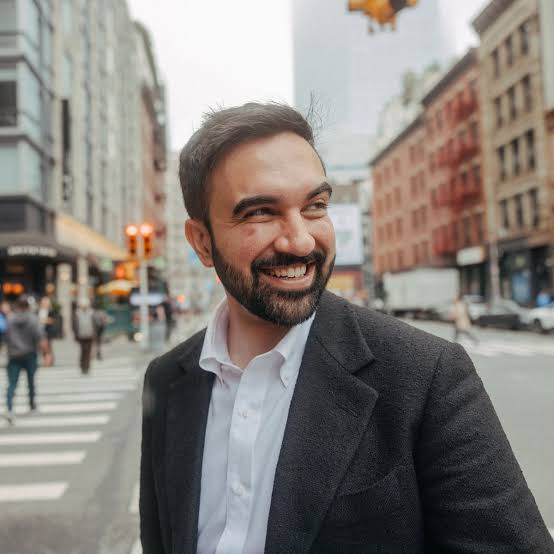
In a historic political milestone, Zohran Mamdani, a 33-year-old state lawmaker of Ugandan-Indian descent, has been elected as New York City’s first Muslim and South Asian mayor, signaling a generational and cultural shift in the leadership of America’s largest city.
The announcement followed the conclusion of the tightly contested 2025 New York City mayoral race, which saw Mamdani, a member of the Democratic Party and a progressive candidate, defeat several high-profile rivals. His victory reflects the growing influence of young, diverse, and socially conscious voters in shaping the future of American urban politics.
Born in Kampala, Uganda, to an Indian family, Mamdani’s background is as multicultural as the city he now leads. He is the son of Mahmood Mamdani, a renowned Ugandan scholar, and Mira Nair, the internationally acclaimed Indian filmmaker behind Monsoon Wedding and The Namesake.
His family’s migration story from East Africa to South Africa and eventually to New York when he was seven years old has profoundly shaped his political philosophy. Educated at the Bronx High School of Science and Bowdoin College, Mamdani studied Africana Studies before embarking on a career rooted in community organizing and social advocacy.
Zohran Mamdani first gained national attention in 2020 when he was elected to the New York State Assembly, representing Astoria and Long Island City in Queens. As a Democratic Socialist, he championed causes such as rent control, free public transit, and immigrant rights policies that resonated deeply with working-class and minority communities across the city.
During his mayoral campaign, Mamdani positioned himself as a voice for fairness and inclusivity. His message focused on affordable housing, climate justice, and economic dignity struck a chord with younger voters and communities seeking relief from rising living costs and deepening inequality.
“Our city’s strength lies in its people every background, every faith, every story,” Mamdani declared in his victory speech. “Today, New York has chosen not just change, but hope rooted in justice, equality, and shared prosperity.”
Mamdani’s rise represents more than a personal triumph it underscores the changing face of American democracy. For decades, New York City politics has been dominated by seasoned insiders and establishment figures. His victory demonstrates the growing power of grassroots movements and the demand for leaders who reflect the diversity of their constituents.
Political observers describe Mamdani’s win as a turning point for minority representation in the United States, particularly for Muslim and South Asian communities.
“Zohran’s success shows that America’s story is expanding,” said a New York-based political analyst. “He’s not just the first Muslim mayor of New York he’s a symbol of what inclusive democracy looks like in the 21st century.”
Despite the celebratory tone, Mamdani faces formidable challenges. The city continues to grapple with housing shortages, public safety debates, and budget constraints. Critics have questioned whether his progressive agenda such as universal rent stabilization and increased taxation on the wealthy can translate into practical governance in a city as complex as New York.
His leadership will also be tested on how he balances idealism with pragmatism. Supporters, however, believe his ability to connect across communities will be his strongest asset. “He listens, he learns, and he acts with empathy,” said community organizer. “That’s what makes him different.”
Zohran Mamdani’s victory is being celebrated around the world from Kampala to Mumbai to Queens. His story embodies the spirit of a city that thrives on diversity, resilience, and reinvention.
As he takes office, all eyes will be on how he translates his progressive ideals into policy, and whether his leadership will mark the beginning of a new political era not just for New York, but for cities across America.
“New York City has always been a place where the world comes together,” Mamdani said. “Now, it’s time to show the world what unity in action truly means.”