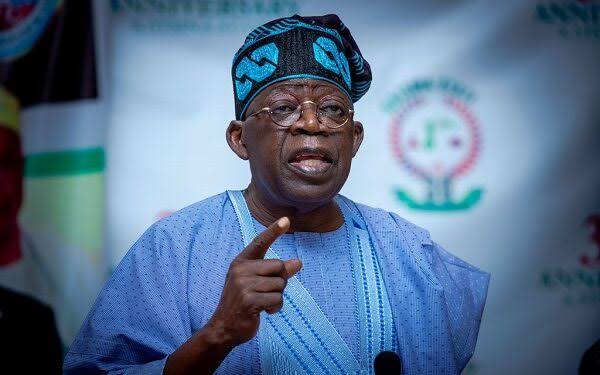
In a decisive move to overhaul Nigeria’s deteriorating security architecture, President Bola Ahmed Tinubu has declared a state of emergency on all security training institutions across the country. The decision follows findings that facilities within the Police, Civil Defence, and other paramilitary agencies are outdated and insufficient to meet the demands of modern security operations.
The President made the declaration after a comprehensive briefing from top security officials and a performance review session at the State House, Abuja. He expressed deep concern over the substandard infrastructure and obsolete training equipment across the nation’s security academies, stressing that Nigeria cannot achieve sustainable peace without well-trained and adequately equipped personnel.
“We cannot expect excellence in our security system when our training institutions remain in decay. This administration will not fold its arms while our frontline defenders operate with 20th-century tools in a 21st-century world,” Tinubu reportedly said during the session.
As part of the emergency directive, state governors and heads of security agencies have been given 30 days to submit a full report on the state of their training facilities, operational readiness, and specific infrastructural needs.
The reports will serve as the foundation for a new national security reform plan, expected to be unveiled early next year.
According to sources familiar with the directive, the report will include assessments from the Nigeria Police Force, the Nigeria Security and Civil Defence Corps (NSCDC), the Nigerian Correctional Service, the Immigration Service, and the Fire Service.
A senior aide to the President noted that the government intends to align these institutions with international best practices and improve coordination between federal and state security agencies.
Focus on Modernization and Capacity Building
The Federal Government’s new approach reportedly prioritizes modern equipment, advanced simulation systems, cybercrime units, intelligence training, and digital policing tools.
This marks the most ambitious institutional reform since the Police Reform Bill of 2020.
An unnamed official in the Office of the National Security Adviser (ONSA) stated that the emergency declaration also opens a pathway for increased funding, international partnerships, and personnel exchange programs with allied countries that have advanced policing and counterterrorism systems.
“The goal is to rebuild capacity from the ground up,” the official said. “We’re looking at rebuilding facilities, retraining instructors, and setting up regional training centers that can serve both national and subnational needs.”
Nationwide Reaction and Expectations
The declaration has been met with cautious optimism among policy experts and civil society groups.
Security analyst Dr. Hassan Oyeleke described the move as “long overdue,” emphasizing that poor training infrastructure has weakened law enforcement for decades.
“It’s a necessary first step. Nigeria’s internal security challenges cannot be solved through weapons alone. We need competence, discipline, and modern training,” Oyeleke stated.
Governors across several states are also expected to convene security council meetings in the coming days to begin compiling their assessments.
President Tinubu’s administration has made internal security a cornerstone of its Renewed Hope Agenda, with previous reforms targeting community policing, intelligence sharing, and counterterrorism coordination.
With this latest declaration, the Federal Government aims to revitalize the foundation of Nigeria’s security system the training institutions responsible for grooming the next generation of officers and responders.
“This is not just about fixing buildings,” Tinubu concluded. “It’s about restoring confidence, competence, and pride in those who defend our nation.”
President Tinubu’s state of emergency on security training institutions marks a major policy shift aimed at strengthening Nigeria’s internal security capacity. The 30-day directive to governors and security chiefs signals the start of what could become the country’s most comprehensive institutional reform in decades.