
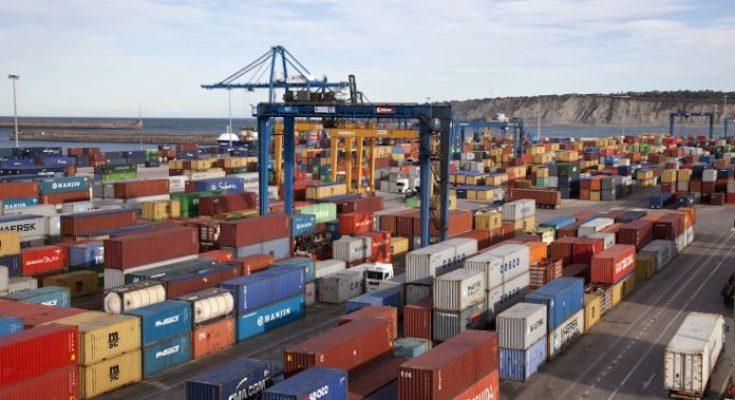
The Federal Government of Nigeria has announced plans to fully implement the long-awaited National Single Window (NSW) Policy across the nation’s ports by 2026, in a bid to streamline trade operations, reduce bottlenecks, and enhance revenue generation.
The initiative, according to the Minister of Marine and Blue Economy, Gboyega Oyetola, will integrate all port-related regulatory and payment systems into a unified digital platform, allowing traders, government agencies, and stakeholders to process import and export documentation seamlessly.
Speaking during a stakeholders’ meeting in Lagos on Thursday, Oyetola emphasized that the new system would revolutionize port operations by curbing delays, corruption, and inefficiency that have long plagued maritime trade in Nigeria.
“The National Single Window is not just a digital upgrade; it is a complete transformation of how we manage trade and logistics in our ports,” Oyetola said. “Our target is to fully implement the system by 2026, and when achieved, it will position Nigeria among the top-performing maritime economies in Africa.”
The minister explained that the Single Window Policy will enable all agencies including the Nigeria Customs Service (NCS), Nigerian Ports Authority (NPA), Nigerian Maritime Administration and Safety Agency (NIMASA), and other stakeholders to share data and process trade documents in real time.
He added that the reform aligns with the World Trade Organization (WTO) Trade Facilitation Agreement, which encourages member countries to simplify and harmonize international trade procedures.
Industry experts predict that the introduction of the single window platform could cut port clearance time by over 50%, reduce logistics costs, and significantly improve Nigeria’s ranking on the World Bank’s Ease of Doing Business Index.
The Executive Secretary of the Nigerian Shippers’ Council (NSC), Pius Akutah, noted that the system will “eliminate duplication of processes, reduce revenue leakages, and enhance transparency.”
“This reform will create a more predictable trading environment and attract more investment into Nigeria’s blue economy,” Akutah said.
Similarly, the Managing Director of the Nigerian Ports Authority, Mohammed Bello-Koko, highlighted that the digital integration would make it easier for importers and exporters to track cargoes, make payments, and resolve clearance issues electronically without physical interference.
“The era of manual documentation and endless delays must end. The Single Window will make Nigerian ports competitive again and improve our capacity to handle global trade volumes efficiently,” Bello-Koko said.
Efforts to establish a national trade single window system in Nigeria date back over a decade, with several pilot programs and policy drafts failing to take off due to bureaucratic bottlenecks, poor inter-agency coordination, and technological limitations.
However, recent developments, including the creation of the Marine and Blue Economy Ministry and renewed presidential backing for port reforms, have reignited optimism that the project will finally see full execution.
Trade experts argue that without such reforms, Nigeria risks losing cargo traffic to neighboring countries like Ghana, Benin Republic, and Côte d’Ivoire, whose ports already operate modern, technology-driven systems.
Private sector operators and trade associations have welcomed the government’s renewed commitment, describing it as a step in the right direction.
The President of the Lagos Chamber of Commerce and Industry (LCCI), Dr. Michael Olawale-Cole, said the single window policy would “reshape the maritime economy, reduce corruption, and enhance competitiveness.”
He urged the government to ensure “full collaboration between ministries, agencies, and private operators” to prevent the reform from becoming another unfulfilled promise.
If successfully implemented, Nigeria’s Single Window Policy could mark a turning point in the country’s maritime and trade sectors, ushering in greater transparency, efficiency, and investor confidence. With 2026 set as the target year, all eyes will be on how the government manages to synchronize the various agencies and systems involved in this ambitious national reform.