
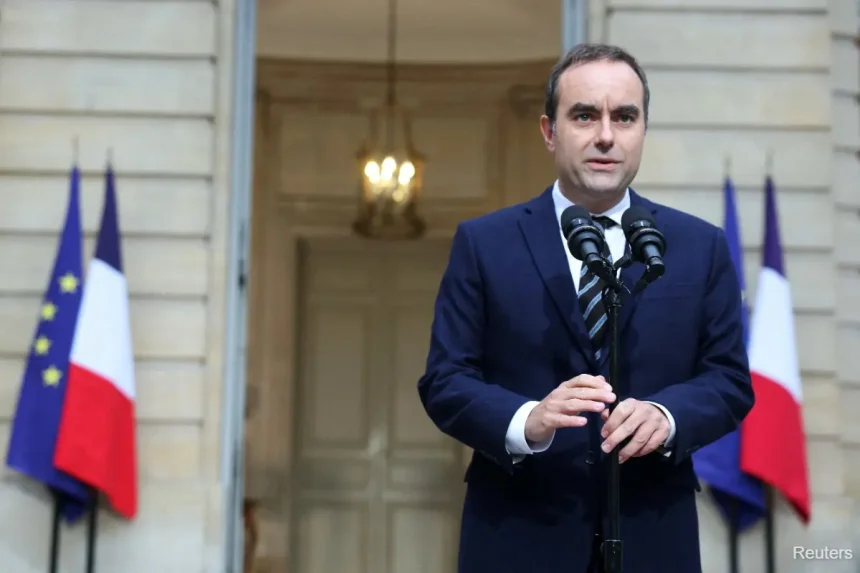
In a dramatic turn of events, Sébastien Lecornu has resigned as Prime Minister of France barely a day after unveiling his government lineup, effectively becoming the shortest-serving premier in the country’s modern history. His abrupt exit intensifies political instability in a nation already reeling from repeated government collapses.
Lecornu assumed office on September 9, 2025, as part of President Emmanuel Macron’s attempt to reset a fragmented legislature. On October 5, he announced his new cabinet,a group largely retaining ministers from his predecessor François Bayrou’s government but within hours of that announcement, he tendered his resignation.
The Élysée Palace confirmed that Macron accepted the resignation early Monday. Lecornu cited insurmountable political divisions and lack of consensus among parties as key reasons for stepping down.
Why It Unraveled So Quickly
Critics wasted no time pinpointing the fault lines:
Lecornu’s cabinet was criticized for being too similar to its predecessor’s, fueling accusations of continuity rather than reform.
Some coalition partners, including the conservative Les Républicains (LR), reportedly withdrew support hours after pledging to join the government, citing dissatisfaction with the cabinet composition.
Lecornu blamed political “ego” and partisan intransigence: “The conditions were not fulfilled for me to carry out my function as prime minister,” he said in his resignation remarks. “It would take little for it to work… by being more selfless… by putting one’s country before one’s party.”
Lecornu’s resignation marks the fourth premiership change in just 15 months,a symptom of France’s deeply fractured Parliament and volatile political dynamics.
His predecessor, François Bayrou, was ousted via a no-confidence vote after failing to pass a controversial 2026 budget. Like many before him, Lecornu confronted a legislature dominated by rival blocs from the far right to the radical left making policy negotiation nearly impossible.
Some observers see this as evidence that Macron’s reliance on loyalists over consensus builders may no longer suffice in France’s current political climate.
Within hours of Lécornu’s resignation, stock markets responded sharply: the CAC-40 index dipped nearly 2% on Paris exchanges.
On the political front, Marine Le Pen of the National Rally party called for snap parliamentary elections, saying that dissolution of the National Assembly was now necessary. Meanwhile, France Unbowed, the hard-left group, demanded Macron’s resignation.
What Comes Next
With Lecornu gone, Macron has to move swiftly. Analysts predict one of two paths:
Appoint a new prime minister who can better negotiate with the fragmented Legislature.
Call a snap legislative election, a risky move that could destabilize Centrist power further.
Whichever route he chooses, the next leader must demonstrate skill in coalition building, or risk more short-lived governments ahead.