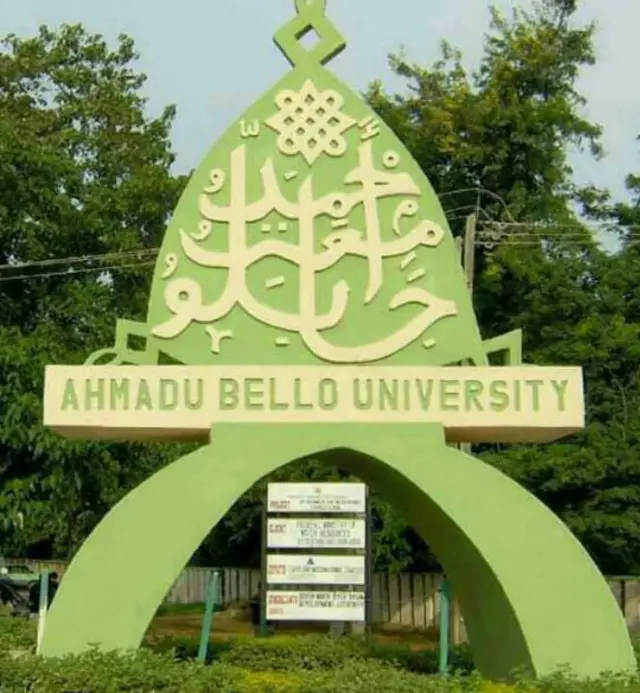
Ahmadu Bello University (ABU), one of Nigeria’s oldest and most respected universities, has lost about 2,000 skilled academic and non-academic staff in the past five years. The university’s Vice-Chancellor, Professor Adamu Ahmed, issued the warning during the institution’s 63rd anniversary, citing aging infrastructure, poor remuneration, and funding shortfalls as central causes.
Professor Ahmed lamented that living and working conditions have taken a toll on staff morale. He said, “Aging infrastructure and poor remuneration have dampened staff motivation. It is disheartening to state that the university has lost nearly 2,000 staff in the last five years.”
He expressed concern that some programmes at ABU are now almost entirely staffed by professors, which might jeopardize future accreditation due to a lack of younger academic staff to take over. “Presently there is a particular programme run by the university whose staff are 95 per cent professors. This development may risk non accreditation of the programme in subsequent time and result in shortage of those who will take over from the existing high calibre staff,” he revealed.
According to the VC, several operational dimensions of the university have been compressed due to the staffing losses. He said that funding constraints have hampered infrastructure renovation, library acquisition, and support for research.
Professor Ahmed also explained that the university must urgently recruit and replace staff to maintain its academic and research standards. Without that, he warned, some programmes may fail accreditation or lose relevance.
Despite the setbacks, ABU has outlined several strategies it intends to deploy to mitigate the brain drain and bolster staff retention:
The Distance Learning Centre (DLC), noted to be Nigeria’s largest, will be strengthened to expand access to education and reduce barriers for staff and students.
ABU plans to embed modern technology and updated pedagogies into its teaching methods.
The VC challenged alumni and benefactors to give back to the university through endowment gifts, donations, and other forms of support to sustain infrastructure and human capital investments.
He also commended the federal government’s reforms in education and the economy but emphasized that ABU’s situation requires more direct intervention.
Why This Matters
Accreditation Risk: If programmes remain overly dependent on older academic staff without younger replacements, accreditation agencies may flag ABU, potentially leading to programme suspensions.
Academic Excellence: Loss of staff erodes research output, supervision of postgraduate students, and the mentorship of junior academics.
Equity and Access: With aging infrastructure and limited resources, opportunities for students may decline, especially in less-funded departments.
National Brain Drain: The movement of staff to more lucrative institutions locally or abroad weakens higher education across Nigeria, not just at ABU.
While official comments focus on data and strategy, some staff members (who spoke off record) expressed frustration:
“The conditions here make it hard to stay. Many of us are looking abroad or to private institutions for better pay and facilities.”
“It is not just about salaries; it is about being able to teach, research, and feel valued.”
These sentiments align with ABU’s official assessment, suggesting that staff migration is both a symptom and a signal of deeper systemic issues in higher education.
What Needs to Be Done
Competitive Remuneration and Incentives :Raise pay, improve allowances, provide professional development to retain staff.
Infrastructure Overhaul :Repair and upgrade lecture halls, labs, libraries, and housing.
Strategic Recruitment: Fill gaps, especially in departments at risk of de-accreditation, and recruit younger academics.
Stakeholder Collaboration: Engage government, alumni, development partners to support funding for human and physical capital.
Monitoring and Correction: Implement systems to track staff retention, identify problematic departments, and respond proactively.
With nearly 2,000 staff lost in five years, ABU is facing a critical inflection point. The university’s reputation for excellence depends not only on its legacy but on its ability to adapt. If the steps outlined by the Vice-Chancellor are followed through, ABU can stem the tide of brain drain, revitalise its research and teaching, and continue to lead among Nigeria’s tertiary institutions. But time is short and the work is urgent.