
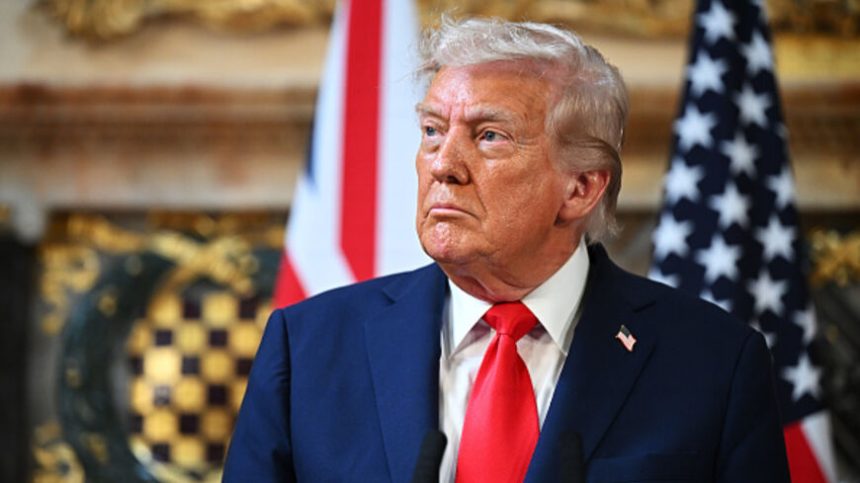
In a statement that has reverberated across the globe, U.S. President Donald Trump has claimed that Hamas is “ready for peace” and urged Israel to “immediately stop bombing Gaza” to allow hostage releases and negotiations to proceed. The announcement marks one of the most consequential interventions since Trump returned to the White House, placing Washington at the center of efforts to end nearly two years of war between Israel and Hamas.
The remarks came hours after Hamas responded to Trump’s 20-point Gaza peace proposal, accepting several provisions while calling for further negotiations on others.
Hamas’s conditional acceptance was outlined in a formal statement through mediators in Doha. The group pledged to:
Release all hostages including both living captives and remains under an exchange formula.
Step aside from governing Gaza, transferring authority to an independent technocratic body backed by Arab and Islamic countries.
Continue negotiations through regional mediators to resolve remaining sticking points.
However, Hamas resisted demands for complete disarmament and declined to set a definitive timeline for Israeli military withdrawal from Gaza, insisting that such issues require wider Palestinian consensus and international guarantees.
“Hamas has shown readiness for a lasting peace, but some elements of the plan need further discussion,” a senior official says
Trump seized on Hamas’s response as a breakthrough moment. On his Truth Social account, he declared: “ Israel must immediately stop the bombing of Gaza so that we can get the hostages out safely and quickly”
The president stressed that negotiations must advance “without delay” and warned Hamas that failure to accept the deal by Sunday evening would have severe consequences.
Analysts say Trump’s statement signals a dual strategy: portraying himself as a broker of peace while threatening punitive action if the deal collapses.
Israel has already expressed conditional acceptance of Trump’s plan, primarily around the first phase that centers on hostage release. Prime Minister Benjamin Netanyahu’s office confirmed that the government is preparing to “advance readiness” for implementing the proposal.
Still, Israeli officials stopped short of committing to a halt in military operations. The Israel Defense Forces (IDF) have maintained that “security concerns” remain paramount, especially around Hamas’s refusal to disarm.
Domestic pressure is also mounting: families of hostages continue to push for immediate deals, while hardliners within Netanyahu’s coalition warn against “capitulation” to Hamas.
The path forward remains fraught with unresolved questions:
Hostages: Hamas has tied release to a staggered exchange process.
Governance: The proposed technocratic authority is widely seen as an interim solution, but who appoints it and how it gains legitimacy is unclear.
Disarmament: Israel and the U.S. insist Hamas must eventually give up weapons; Hamas considers this a “non-starter.”
Sovereignty: The timeline for Israeli withdrawal and the future status of Gaza remain sensitive and divisive.
The international community has responded with cautious optimism.
Qatar and Egypt, longstanding mediators, welcomed the conditional progress and pledged to intensify shuttle diplomacy.
The United Nations Secretary-General urged both sides to seize the moment, warning that Gaza’s humanitarian crisis “cannot bear another breakdown in negotiations.”
European allies have backed Trump’s mediation but warned that “half-measures” won’t suffice without credible commitments to reconstruction, governance, and security guarantees.
Trump’s comments have split public opinion at home and abroad. Supporters hail his approach as bold and pragmatic, while critics fear it undermines Israel’s security posture. In Israel, the call to halt bombing has stirred debate: while some families of hostages see it as a lifeline, right-wing politicians describe it as “American interference.”
For Hamas, the conditional acceptance signals both pragmatism and internal division. Analysts suggest that some factions are open to compromise, while others resist yielding political or military control.
The clock is ticking. Hamas has until Sunday evening to deliver a final response. Over the next 48 hours:
Israel’s military posture will show whether it intends to heed Trump’s call for a pause.
Hamas leaders in Gaza and abroad will finalize their stance.
Mediators in Qatar, Egypt, and the U.S. will attempt to bridge the gaps.
If successful, Trump could preside over the first genuine step toward peace in Gaza in years. If not, the risk of escalation and renewed violence remains high.
Trump’s declaration that Hamas is “ready for peace” and his demand that Israel halt bombings highlight just how delicate and volatile this moment is. For families of hostages, war-weary civilians, and a region battered by years of conflict, the stakes could not be higher.
Whether this becomes the breakthrough that ends the Gaza war or another false dawn depends on the coming days.