
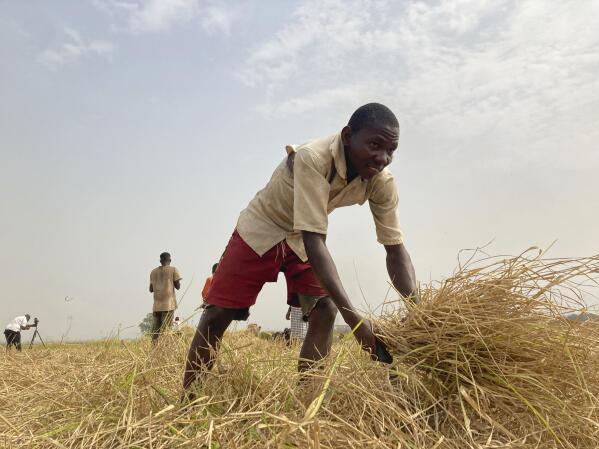
Tension gripped Roro village in Obafemi-Owode, Ogun State, after a local farmer, identified in community reports as Taiwo Amos, confessed to killing a Fulani herder’s son and was promptly arrested by police. The admission reportedly made ahead of a planned traditional oath-taking ceremony intended to expose the culprit has reawakened anxieties about simmering farmer-herder tensions that have spread across much of Nigeria.
This account unpacks what happened in Roro, why communities sometimes resort to oath rituals to resolve violent mysteries, and how a single killing fits into a national pattern of land-use friction, climate pressure and insecurity that analysts say requires urgent, multi-pronged responses.
The Roro incident: confession, arrest and local fear
According to local news outlets, residents raised the alarm after a cattle rearer reported his boy missing. Community searchers later found the child buried in a shallow grave. Faced with mounting suspicion and a planned communal oath a ritual many believe will cause harm to anyone who lies the suspect reportedly stepped forward and confessed that he “felt a voice” or “sudden urge” to kill. Ogun State police have taken the man into custody and say investigations are ongoing.
Community leaders in Roro called for calm while security operatives secured the area to prevent reprisal attacks. Residents expressed relief that a suspect had been arrested, but also deep unease: the incident revives memories of earlier cycles of violence between pastoralists and farmers that can escalate quickly into wider communal clashes.
In many parts of Nigeria, when criminal investigations stall or trust in formal processes is weak, communities sometimes resort to traditional oath-taking and divination to reveal truth and deter lies. Deities such as Ayelala and local forms of oath (for example “mbiam” among some groups) are invoked to bind statements people swear that if they lie, supernatural punishment will follow. These customs remain culturally powerful in parts of the south and middle belt. While such rituals may help secure confessions, they also reflect a deeper lack of confidence in institutions and access to justice.
Legal experts warn that communal oaths are risky: they can fuel vigilantism, and false accusations may be motivated by revenge or land disputes. Security observers say communities should be encouraged to allow formal investigations to run while traditional leaders help calm tensions.
While the Roro case is local, research and reporting show that conflicts between farmers and pastoralists have become a major driver of violence across Nigeria. Environmental change, expansion of farmland, shrinking grazing routes and greater competition for water and pasture have pushed many herders southwards and into contact with sedentary farmers. The result has been a sustained rise in clashes, displacements and deaths over the last decade.
International and local reporting note the human and economic toll. Reuters and other outlets have documented waves of attacks that forced many farmers to abandon their fields, contributing to higher food prices and economic strain in rural areas. Meanwhile, large-scale killings in the middle belt including dozens of fatalities in events reported this year illustrate how deadly these confrontations can become.
Estimates vary, but analytical reviews suggest thousands of deaths over recent years linked directly to farmer-herder clashes, with the problem spreading geographically beyond traditional hotspots. Many analysts believe recorded figures understate the true toll, because remote incidents often go unreported.
Experts point to several overlapping causes:
Loss of grazing land and traditional migration routes due to expanding agriculture and desertification.
Climate change, which has made pasture and water more unreliable in the Sahel, pushing herders into new zones.
Weak regulation of land use and inconsistent enforcement of anti-open grazing laws in some states.
Proliferation of small arms and fragile local dispute-resolution mechanisms that fail to defuse tensions before violence erupts.
These structural pressures mean that isolated incidents a missing child, a trespassed herd, or an alleged theft can spark rapid escalation unless handled transparently and quickly.
Policymakers, security analysts and civil society groups recommend a mix of short- and long-term measures:
Immediate policing and protection: Rapid, impartial investigation of incidents, visible policing to prevent reprisals, and protection for vulnerable communities. Local reports indicate police moved in after the Roro confession, a necessary first step.
Reinforcing dispute resolution: Empower respected traditional leaders, local courts and neutral mediators to resolve grazing and crop-damage disputes before they escalate.
Land-use planning and grazing reserves: State and federal governments should map and protect grazing corridors, provide designated ranching or ranching support, and invest in drought-resilient fodder and water points.
Tackle climate vulnerability: Longer-term investments in climate-smart agriculture, irrigation, and alternative livelihoods for pastoralists could reduce migration pressure.
Disarmament and rule of law: Enforce weapons controls, prosecute perpetrators, and ensure communities trust formal justice mechanisms so they do not resort to oaths or vigilante reprisals.
Analysts stress that security measures alone will not solve the problem: economic options for pastoralists, clearer land policy and stronger community policing are also essential.
For Roro village, the immediate challenge is to prevent revenge and restore trust between neighbours. For Nigeria, each killing is a warning: unless the causes of farmer-herder conflict are addressed, similar flashpoints will continue to flare up across states, undermining food production, displacing families and deepening ethnic and religious polarization.
As officials investigate the Roro killing and the suspect awaits formal charges, community leaders, police and state government must act quickly not only to prosecute wrongdoing, but to mend the social fabric that makes neighbours see one another as rivals rather than partners in a shared agricultural economy.