
By Kabiru Abdulrauf
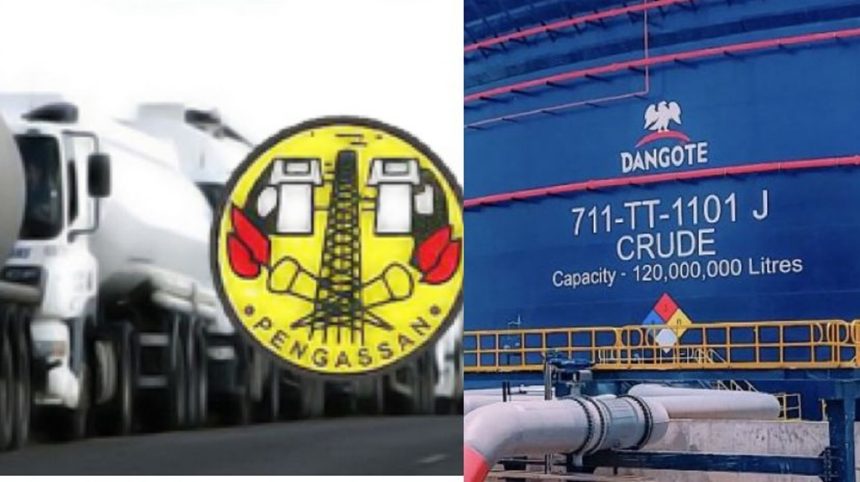
Nigeria’s critical oil and gas sector faces a potential shutdown as the Petroleum and Natural Gas Senior Staff Association of Nigeria (PENGASSAN) begins a nationwide strike in protest against alleged mass dismissals at Dangote Refinery.
The Federal Government, in a last-minute intervention, has appealed to the union to suspend the strike and attend an emergency conciliation meeting scheduled for Monday in Abuja.
Minister of Labour and Employment, Muhammad Dingyadi, urged PENGASSAN to withdraw its strike notice, warning that the industrial action could have severe consequences for Nigeria’s economy and security.
“A strike will not only lead to heavy revenue losses but also cause more hardship and difficulties for Nigerians,” Dingyadi said in a statement signed by the ministry’s spokesperson, Patience Onuobia.
The Minister confirmed that invitations had been extended to both PENGASSAN leadership and Dangote Refinery management for a roundtable discussion. He assured Nigerians that the Federal Government would work to resolve the matter “amicably and in the national interest.”
PENGASSAN’s strike call followed an emergency National Executive Council meeting on Saturday, where the union accused Dangote Refinery of sacking workers for joining the association — a move it described as a violation of Nigeria’s labour laws, the Constitution, and International Labour Organisation (ILO) conventions.
The union alleged that the refinery had replaced the dismissed Nigerian workers with “over 2,000 Indians,” calling the action “an affront to all workers in Nigeria.”
The union’s directive orders members in field locations to down tools beginning Sunday, with a full nationwide shutdown across offices, companies, institutions, and agencies to take effect on Monday.
In a statement released Friday, the refinery denied claims of arbitrariness, explaining that the dismissals were part of a targeted reorganisation to address repeated cases of sabotage that threatened safety and operational efficiency.
“This exercise is not arbitrary. It has become necessary to safeguard the refinery from repeated acts of sabotage… with dire consequences on human life,” the company stated.
The refinery maintains that the restructuring was conducted in the best interest of its operations and workers, while emphasising its commitment to safety and efficiency.
The dispute comes at a sensitive time for Nigeria’s economy, with the Dangote Refinery expected to play a crucial role in reducing the country’s dependence on imported refined petroleum products.
A prolonged shutdown by PENGASSAN could disrupt petroleum product distribution, destabilise supply chains, and trigger price spikes — compounding the economic strain already felt by consumers.
With Monday’s conciliation meeting seen as a critical opportunity to defuse tensions, stakeholders will be watching closely to see whether both parties can find common ground and avert a nationwide energy crisis.