By Aisha Muhammad Magaji
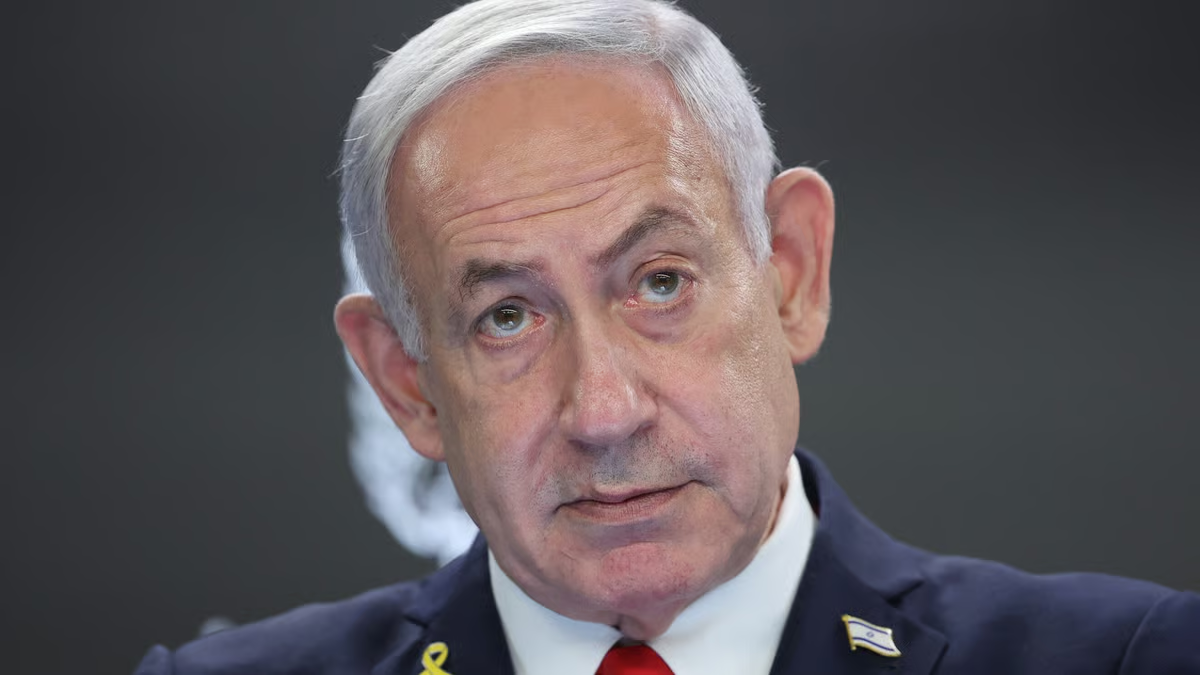
Israeli Prime Minister Benjamin Netanyahu has criticized recent moves by several world leaders to formally recognize a Palestinian state, warning that such steps undermine ongoing peace efforts and reward what he described as “Palestinian intransigence.”
The remarks came on Tuesday, just days before Netanyahu is set to travel to Washington, D.C., for high-level meetings with U.S. officials, including President Donald Trump, where Middle East peace and security will be top of the agenda.
Speaking at a press conference in Jerusalem, Netanyahu condemned the recognition moves by European and Latin American countries, saying they send the wrong message at a delicate moment in peace negotiations.
“Premature recognition of a Palestinian state without direct negotiations only encourages rejectionism,” Netanyahu said. “True peace can only come through dialogue, compromise, and mutual recognition not through unilateral declarations.”
In recent months, Spain, Ireland, and several South American nations have announced formal recognition of Palestinian statehood, citing the need to break the deadlock in talks and ensure Palestinians enjoy their right to self-determination.
Their decisions have been welcomed by Palestinian leaders, who argue that international recognition strengthens their case for sovereignty and pressures Israel to engage seriously in negotiations.
Palestinian President Mahmoud Abbas hailed the recognitions as a “historic step toward justice,” ahead of his own address at the United Nations General Assembly later this week.
“The world is standing with us in our pursuit of freedom and independence,” Abbas said in a televised statement from Ramallah. “No amount of threats or pressure will stop the march toward Palestinian statehood.”
Netanyahu’s trip to Washington is expected to focus heavily on regional security, particularly Iran’s nuclear program, as well as the shifting dynamics of the Israel-Palestine conflict.
U.S. officials have so far avoided taking a clear position on the wave of recognitions, but analysts suggest the issue is likely to feature prominently in talks.
Professor David Cohen, an expert on Middle East politics at Tel Aviv University, noted: “Netanyahu will want to secure U.S. backing to push back against these recognitions, while Palestinians will try to use growing international support to press Washington into action.”
The recognitions come at a time when violence has flared in the West Bank and Gaza, raising fears that the diplomatic standoff could escalate into a wider conflict.
International mediators, including the United Nations and the European Union, have urged restraint and called for a return to negotiations, but both sides remain deeply divided on key issues such as borders, settlements, and the status of Jerusalem.
As Netanyahu prepares for his U.S. trip, the growing momentum behind Palestinian recognition threatens to reshape the diplomatic landscape. Observers say his meetings in Washington could prove pivotal in determining whether the peace process regains traction or slides further into stalemate.
For now, the war of words highlights the widening gulf between Israel’s position and the international community’s push to recognize Palestinian statehood.