
By Aisha Muhammad Magaji
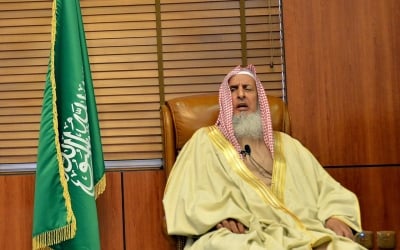
Saudi Arabia’s Grand Mufti, Sheikh Abdulaziz bin Abdullah Al‑Sheikh, has passed away at the age of 82, the Royal Court announced Tuesday. The head of the kingdom’s Council of Senior Scholars and a leading religious authority for over two decades, his death marks the end of one of the longest-serving tenures in Saudi Arabia’s religious leadership.
Sheikh Abdulaziz was appointed Grand Mufti in 1999 and simultaneously served as head of the Permanent Committee for Islamic Research and Issuing Fatwas. Over his tenure, he shaped religious jurisprudence across the kingdom, guided Islamic education, and played a key role in advising the government on religious matters. His influence extended to the Gulf region, and he was widely regarded as a prominent conservative voice in the Muslim world.
During his career, Sheikh Abdulaziz was sometimes controversial. He condemned certain political and militant groups, including Hamas, calling its actions “a disgrace to Islam.” He also maintained conservative positions on social issues and often aligned closely with the policies of the Saudi state, reflecting the Kingdom’s model of governance where religious authority and state policy are intertwined.
The Royal Court confirmed that funeral prayers will be held at Imam Turki bin Abdullah Grand Mosque in Riyadh, following the afternoon prayer. Additional prayers in absentia will take place in Mecca, Medina, and mosques across the kingdom.
King Salman and Crown Prince Mohammed bin Salman sent condolences to the family and the global Muslim community, describing Sheikh Abdulaziz’s passing as “a great loss for the kingdom and the Islamic world.”
Scholars and analysts say the appointment of a new Grand Mufti will be closely watched, as the position remains central to both religious and political life in Saudi Arabia. Observers also expect that his legacy will influence the kingdom’s ongoing efforts to balance traditional religious values with social and cultural reforms.
Sheikh Abdulaziz Al‑Sheikh leaves behind a legacy marked by steadfast conservatism, religious scholarship, and significant influence over two decades of Saudi religious and national policy.