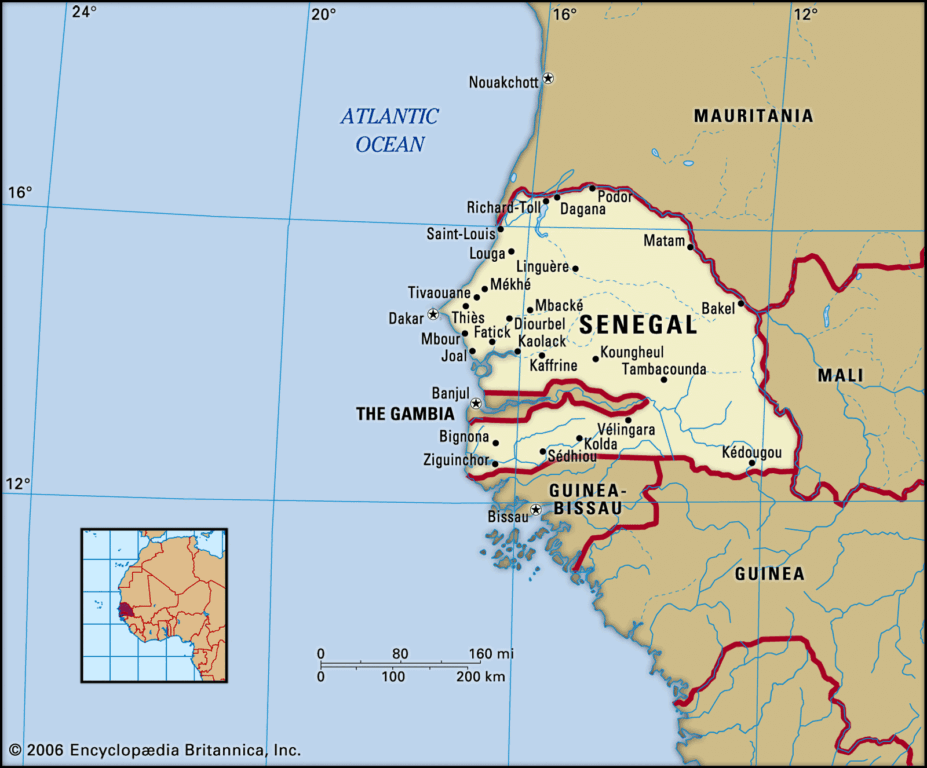
Inside a busy newsroom in Dakar, Senegal a red “On Air” light signals the start of a broadcast. Journalists prepare stories, edit videos, and review scripts.
At InfoElles, the focus is clear. Women’s voices must be heard.
The platform was founded by Alice Djiba. Her goal is to improve how women are represented in the media.
InfoElles produces digital content, TV programs, and discussions on gender equality.
“We support the rights of women and girls through our work,” Djiba said.
InfoElles combines journalism with social projects. It does not just report stories. It also creates programs that support women in media.
This approach helps more women participate in storytelling and public debate.
Some topics are difficult to discuss openly. These include cultural practices and social pressure.
According to Aïssatou Camara, trust is key.
“We protect our sources and build relationships,” she said. “This helps women feel safe to share their stories.”
InfoElles also involves men in the discussion. Programs like Au Masculin focus on shared responsibility.
Gender advocate Papa Amadou Sarr says equality is a collective effort.
“This is a fight for everyone,” he said.
Despite progress, many women still hesitate to speak publicly.
According to Marguerite Rosalie Ndiaye, stigma and stereotypes remain strong.
“Many women are qualified, but they are afraid to speak,” she explained.
In 2024, InfoElles received the Francophone Prize for Media Innovation. The award came from groups like Organisation internationale de la Francophonie and Reporters Without Borders.
The recognition highlights the platform’s growing impact.
For Djiba, the mission goes beyond visibility. It is about changing who controls the narrative.
InfoElles is helping build a media space where women are not just featured. They are leading, producing, and shaping the stories.
In Dakar, that shift is already underway.