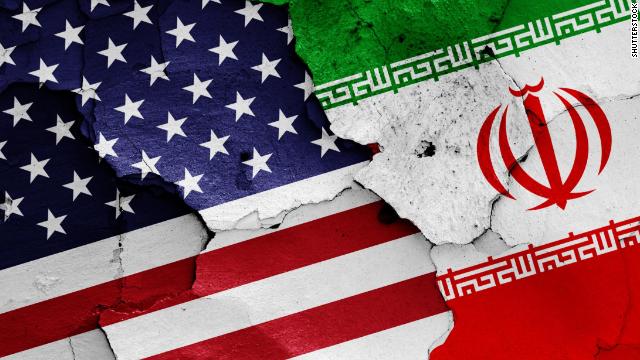
The military confrontation between United States and Iran marks one of the most serious escalations in the Middle East in recent years.
What began as targeted strikes has evolved into direct hostilities. Experts warn this could trigger broader regional war and global economic fallout.
The conflict escalated after U.S. and Israeli strikes on Iranian military and nuclear sites. Iran retaliated with missile and drone attacks on U.S. assets and allies.
Unlike prior proxy skirmishes, this confrontation involves direct strikes on sovereign territory. Oil markets reacted immediately, shipping routes faced risks, and diplomatic tensions surged worldwide.
The key question remains: will this remain a contained campaign, or expand into prolonged regional conflict?
Comparing Iran to Saddam Hussein’s Iraq
In 2003, the U.S. invaded Iraq under Saddam Hussein, citing weapons of mass destruction. The intervention included a full ground invasion and regime change.
Similarities with Iran include:
- Allegations linked to weapons programs
- Questions around pre-emptive military action
- Risk of long-term regional instability
Differences:
- No full ground invasion in Iran
- Iran has stronger regional alliances and sophisticated missile capabilities
The Iraq experience showed that removing a regime does not guarantee stability—a key lesson for policymakers considering Iran.
Comparing Iran to Usama bin Laden
After September 11, the U.S. targeted Usama bin Laden and Al-Qaeda.
Key differences with Iran:
- Bin Laden was a non-state actor; Iran is a sovereign state
- Bin Laden conflict was counter-terrorism; Iran conflict is geopolitical
- State-to-state escalation in Iran is far larger in scale
While the bin Laden campaign focused on intelligence-driven missions, the Iran conflict involves direct military exchanges with major risks of escalation.
Comparing Iran to Nicolás Maduro
Tensions with Nicolás Maduro focused on sanctions, diplomacy, and alleged electoral fraud.
Differences with Iran:
- No direct military engagement with Maduro
- Iran has strategic regional influence
- Iran controls proximity to key oil routes
- Iran has advanced missile capabilities
Where Venezuela was a political and economic standoff, Iran represents a high-intensity security confrontation with global implications.
Risk of Regional Escalation
Iran maintains ties with allied groups across the Middle East. Escalation could involve multiple actors beyond direct U.S.–Iran exchanges.
Past conflicts show limited objectives can quickly expand. Miscalculations could intensify fighting.
Energy markets are already affected. The Strait of Hormuz is a flashpoint for global oil supply. Any disruption could spike fuel prices worldwide.
Legal and Strategic Questions
The Iran conflict raises issues around:
- International law and proportionality
- U.S. congressional authorization
- Defined military objectives
Past interventions highlight the risks of ambiguity. Clearly defined goals are essential to prevent prolonged instability.
What Makes the Iran Conflict Unique
The current crisis is distinct:
- Iran is a sovereign state, unlike Al-Qaeda
- Iran has strong regional alliances and missile capabilities
- Iran controls energy routes critical to the global economy
This combination makes the U.S.–Iran conflict uniquely volatile. Its consequences extend beyond military clashes to global economic and strategic concerns.
Every major U.S. intervention over the past two decades started with clear objectives and urgent rhetoric. Many evolved into longer, complex engagements.
The outcome of the U.S.–Iran conflict will depend on Diplomatic backchannels, Military restraint and Global pressure for de-escalation with history suggesting that the aftermath of conflicts often proves more consequential than the opening strikes.