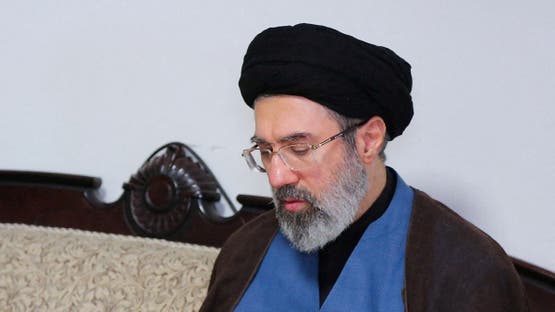
Mojtaba Khamenei is a powerful Iranian cleric.
He is widely discussed as a possible successor to his father, Ali Khamenei, who has led Iran since 1989.
Although Mojtaba rarely appears in public politics, analysts say he has significant influence within Iran’s leadership circle.
Here is what you need to know about him.
Mojtaba Khamenei was born in 1969 in Mashhad, Iran.
He is the second son of Ali Khamenei.
He studied Islamic theology in the religious seminaries of Qom, the center of Shiite scholarship in Iran.
Today, he holds the clerical rank of Hojjatoleslam, which is below the rank of Ayatollah.
However, religious rank is not the only factor that determines political influence in Iran.
Read Also: Iran Confirms Death of Supreme Leader Ayatollah Ali Khamenei
Mojtaba Khamenei has never held elected political office.
However, he is believed to play an influential role within the office of the Supreme Leader.
Observers say he acts as a gatekeeper to his father’s political network.
Additionally, he reportedly maintains strong ties with the Islamic Revolutionary Guard Corps, a powerful institution in Iran’s political system.
These connections give him influence across security and clerical circles.
Mojtaba Khamenei remains a controversial figure in Iranian politics.
Critics accuse him of exercising political power behind the scenes.
Some analysts also link him to the political tensions that followed Iran’s 2009 presidential election protests.
Additionally, the United States Department of the Treasury sanctioned him in 2019.
U.S. officials accused him of supporting the policies of Iran’s ruling establishment.
Several factors explain why Mojtaba Khamenei is viewed as a potential future leader.
First, he has close access to Iran’s political elite.
Second, he maintains relationships with key security institutions.
Finally, conservative factions within Iran’s leadership are believed to support him.
However, some critics argue that his appointment could resemble a hereditary transfer of power.
Such a development would be controversial because the 1979 Iranian Revolution rejected monarchy.
Iran’s Supreme Leader is selected by the Assembly of Experts.
This body consists of senior Islamic scholars.
The Supreme Leader holds enormous authority in Iran.
He commands the armed forces and influences major state policies.
Since the 1979 revolution, only two individuals have held the position:
• Ruhollah Khomeini
• Ali Khamenei
Mojtaba Khamenei remains a powerful but discreet figure in Iran’s political system.
His influence within clerical and security circles makes him one of the most discussed figures in Iran’s future leadership debate.
However, any succession decision will ultimately rest with the Assembly of Experts.