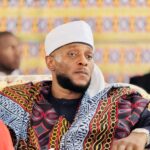
In a nation long accustomed to political rhetoric, Rt. Hon. Yusuf Gagdi’s recent outburst in the House of Representatives landed like a thunderclap. His words weren’t laced with politics or opposition bravado they were raw, factual, and, perhaps most importantly, reflective of a frustration shared by millions of Nigerians.
The lawmaker questioned a reality that can no longer be ignored: how is it that after months of record oil revenue, subsidy savings, new taxes, and continuous domestic borrowing, there is still nothing tangible on the ground to show for it?
“If, with all the talk of excess revenue, subsidy savings, and continuous borrowing, not a single kobo has gone into capital projects this late in the year, then something is seriously wrong,” Gagdi declared.
He’s right and that truth stings.
The Federal Government’s economic narrative has been built around “reforms,” “renewed hope,” and “long-term recovery.” Yet, Nigerians are asking: Where are the results?
Despite the removal of petrol subsidies, which was supposed to free up trillions for infrastructure, healthcare, and education, the streets remain riddled with potholes, schools are still crumbling, and hospitals remain under-equipped.
Even more concerning, ministries and agencies have reported zero releases for capital expenditure deep into the fiscal year. That means no roads constructed, no hospitals upgraded, no bridges repaired, no irrigation systems expanded essentially, no visible impact of the so-called reform era.
So, the question echoes from the chambers of the National Assembly to the marketplaces in Kano and the classrooms in Port Harcourt: where’s all the money really going?
Gagdi’s statement is more than an isolated complaint it’s a wake-up call. For too long, Nigeria’s political elite have hidden behind fiscal jargon and opaque statistics. Terms like “budget performance,” “deficit financing,” and “cash-backed releases” are thrown around to confuse, not to clarify.
But ordinary Nigerians understand reality in simpler terms: no new infrastructure, no jobs, no improvement in living conditions despite record government earnings.
In recent months, the government has borrowed billions from domestic and international lenders, touting them as lifelines for development. Yet, reports from ministries suggest that capital project disbursements have barely begun. This disconnect between policy and performance is not just bureaucratic it’s moral.
When leaders fail to translate resources into results, they don’t just waste money they erode public trust, the single most vital currency of governance.
What Nigeria faces today is not merely an economic dilemma but a crisis of transparency. Citizens deserve to know how the supposed “savings” from subsidy removal are being utilized. The Ministry of Finance must publish detailed breakdowns of capital releases and project execution.
It’s time to stop hiding behind excuses of “technical delays” and “cash flow constraints.” Accountability should not be seasonal it should be standard. The National Assembly, rather than merely lamenting, must use its oversight powers to compel the executive to act.
If a government claims to be reformist, then it must be courageous enough to open its books. The silence surrounding public spending is deafening and dangerous.
Hon. Gagdi’s outspokenness represents something rare in today’s political climate: honesty from within the system. His remarks remind Nigerians that the demand for accountability isn’t opposition politics it’s patriotism.
To tell uncomfortable truths in an environment where loyalty often means silence is an act of service to the people. His question “Where’s all the money really going?” might sound rhetorical, but it strikes at the very heart of governance failure.
And until that question is answered with proof not promises Nigeria’s “renewed hope” agenda will remain just that: a slogan, not a solution.
The government cannot continue to talk reform while running on rhetoric. The numbers no longer match the narrative. Nigerians are paying higher taxes, facing higher fuel prices, and enduring a depreciated naira all for promises of growth that remain invisible.
If capital projects remain frozen, if budgets remain theoretical, and if transparency remains elusive, then the system itself is broken.
Nigeria’s future will not be defined by slogans or speeches but by accountability and tangible results. Rt. Hon. Gagdi’s words should not die in the noise of politics they should spark a nationwide demand for fiscal truth.
The people deserve answers, not excuses. The country deserves action, not abstractions.
Until the government can show where the money truly goes, every reform no matter how noble in theory will remain a mirage.