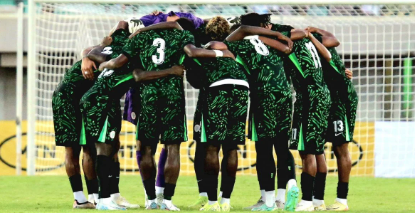
Once again, Nigeria’s Super Eagles are in the news, not purely for their football, but for a crisis that has become as familiar as green-and-white jerseys: unpaid bonuses.
On the eve of a crucial AFCON 2025 quarterfinal clash with Algeria, reports emerged that players were yet to receive their agreed match entitlements. It was a moment that should have been defined by tactics, team selection, and national anticipation. Instead, it exposed a system still struggling to do the basics right.
In an extraordinary but troubling twist, the Super Eagles’ captain reportedly stepped forward, promising to personally cover the bonuses should the Nigerian government fail to pay before the weekend.
While the gesture was widely praised as selfless leadership, it also underscored a deeply uncomfortable truth: Nigeria’s football administration has become so unreliable that players now look inward for solutions that should never be their responsibility.
This saga is not new as he Super Eagles have, in the past, threatened to boycott World Cup qualifiers over unpaid entitlements. The same script replayed itself during the AFCON 2025 quarterfinal buildup against Algeria, where negotiations over money once again competed with match preparation.
For elite athletes expected to perform under immense pressure, such distractions cut deep, eroding morale, disrupting focus, and projecting an image of dysfunction to the global football community.
The roots of this problem stretch far back. During the presidency of Muhammadu Buhari, the federal government eventually redeemed long-standing housing allocations promised to members of the 1994 AFCON-winning Super Eagles.
While not a direct payment of match bonuses, the move was symbolic, a reminder that Nigerian athletes often wait decades for rewards tied to moments of national glory. Celebrated heroes, it seems, are remembered long after the paperwork gathers dust.
At the heart of this recurring embarrassment sits the Nigeria Football Federation (NFF), the body charged with budgeting, managing, and disbursing players’ entitlements. Repeated delays have fueled allegations of poor planning, weak accountability, and limited transparency. In a modern football economy, where contracts are clear and timelines precise, such lapses are indefensible.
Match bonuses are not gifts, but contractual obligations, terms agreed upon before a ball is kicked. When those obligations are not met, the damage goes beyond the dressing room. Nigeria’s football brand suffers, trust erodes, and the narrative shifts from sporting excellence to administrative failure.
Until the NFF confronts this structural weakness head-on through better financial planning, transparent processes, and respect for player agreements, Nigerian football will continue fighting unnecessary battles off the pitch.
And each time it happens, the Super Eagles are forced to prove not just their talent, but their resilience in a system that keeps asking them to pay the price for failures that are not theirs.
When Bonuses Become Breaking Points: Nigeria’s Endless Battle Off the Pitch
On the eve of a crucial AFCON 2025 quarterfinal clash with Algeria, reports emerged that players were yet to receive their agreed match entitlements. It was a moment that should have been defined by tactics, team selection, and national anticipation. Instead, it exposed a system still struggling to do the basics right.

Kabiru Abdulrauf is known for his clear, concise storytelling style and his ability to adapt content for television, online platforms, and social media. His work reflects a commitment to accuracy, balance, and audience engagement, with particular interest in African affairs and global developments.