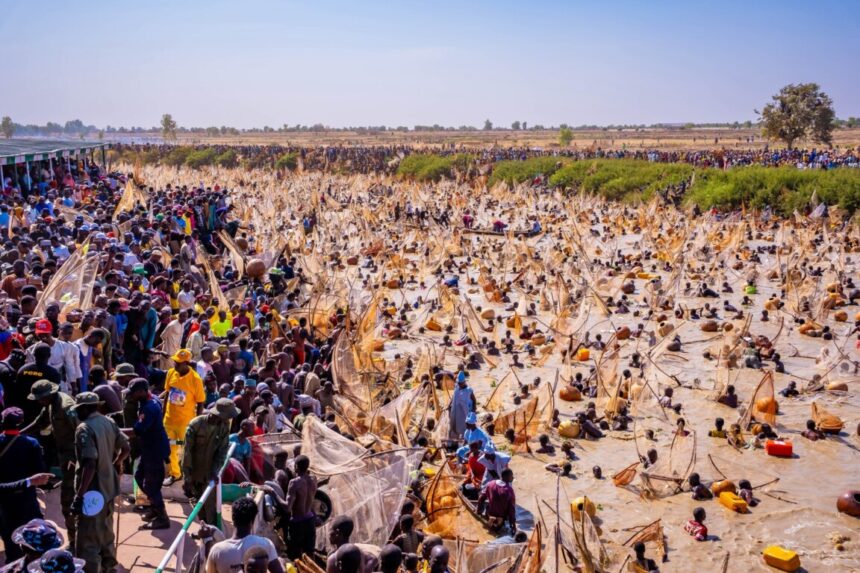


The International Argungu Fishing and Cultural Festival held annualy in Kebbi state is far more than a fishing contest, but a vibrant cultural celebration that blends sport, heritage, music, trade, and agriculture, with many of its activities known by their original Hausa or Kebbawa names.
At the heart of the festival is Kamun Kifi, which literally means “catching fish.” This is the grand fishing competition that draws thousands of fishermen into the Matan Fada River armed with traditional hand nets and calabashes.
Within a limited time, participants attempt to catch the largest fish, with the winner earning significant prizes and lasting prestige. The dramatic rush into the river has become one of Africa’s most recognisable cultural spectacles.
Another major attraction is Gasar Kwale-kwale, the canoe racing competition. The word Gasar means “competition,” while Kwale-kwale refers to “canoes.” Teams paddle long, handcrafted boats across the river in high-speed races that showcase teamwork, endurance, and mastery of the waterways skills deeply rooted in the fishing communities of Kebbi.
Traditional wrestling, known locally as Kokawa, is also a crowd favourite. Wrestlers compete in sandy arenas, relying on strength, balance, and technique to defeat their opponents.
The matches are intense and symbolic, reflecting long-standing northern Nigerian traditions that celebrate bravery and honour.
Equestrian culture features prominently through Gasar Dawakai, meaning horse competition. Dawakai translates to “horses.”
The event combines competitive horse racing with colourful equestrian displays. Riders dressed in elaborate traditional regalia demonstrate exceptional horsemanship, reflecting the historic importance of horses in Hausa society.
Music and dance are central to the festival’s atmosphere. Rawar Gargajiya means “traditional dance,” while Kade-kade refers to drumming and musical performances.
Praise singers, drummers, and dancers dressed in vibrant attire perform before enthusiastic crowds, preserving stories, values, and historical narratives through rhythm and movement.
Commerce and craftsmanship also play a major role through Baje Kolin Sana’o’i. Baje Koli means “exhibition,” and Sana’o’i refers to crafts or trades.
Artisans showcase leatherwork, weaving, embroidery, beadwork, and other traditional crafts, providing both cultural display and economic opportunity.
Agriculture and livestock exhibitions, known as Baje Kolin Noma da Kiwo, further highlight the region’s agrarian strength. Noma means farming, while Kiwo means animal rearing.
Farmers and herders present livestock and produce, reinforcing the agricultural backbone of Kebbi State.
Together, these activities reflect the traditions of the Kebbawa people and the broader Hausa communities of northwestern Nigeria.
The preservation of their original local names reinforces linguistic heritage and cultural authenticity, ensuring that the Argungu festival remains not just a tourist attraction, but a living symbol of identity, unity, and continuity.