
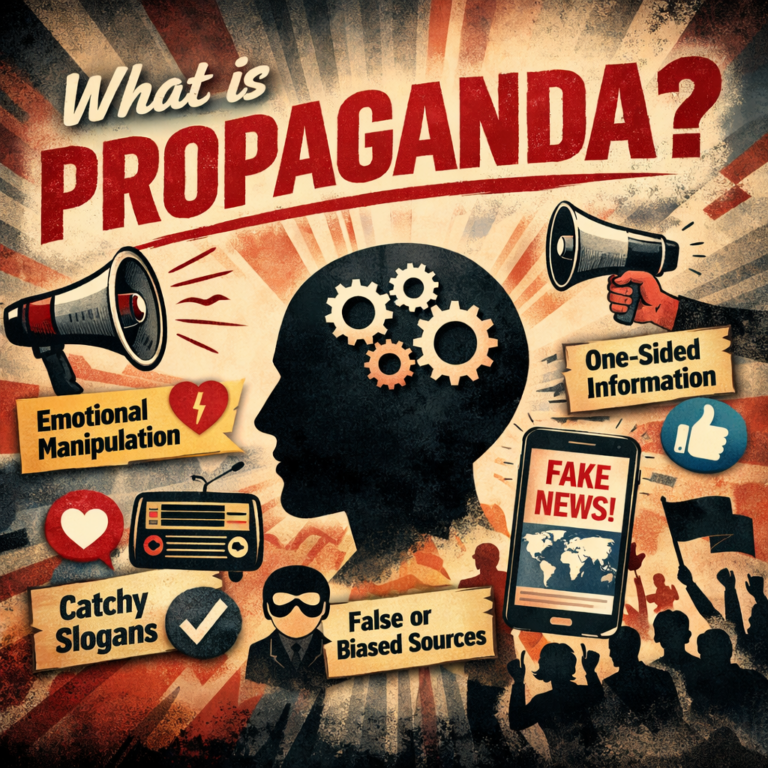
Propaganda is a form of communication designed to influence how people think, feel or act about political ideas.
Unlike neutral information, propaganda often presents selective or exaggerated messages to promote a specific agenda or viewpoint.
The concept became widely known during major conflicts such as World War I and World War II.
During these wars, governments used posters, radio broadcasts and newspapers to shape public opinion and encourage support for national policies.
Read Also: What “Innocent Until Proven Guilty” Means in Law
Today, propaganda is not limited to wartime communication and can appear in politics, advertising, social media and public debates.
One common feature of propaganda is emotional manipulation designed to trigger fear, anger, pride or hatred among audiences.
Another sign is one-sided information that highlights one perspective while ignoring important facts or opposing viewpoints.
Audiences are also advised to examine the source of a message before accepting it as credible information.
Reliable information usually comes from transparent and verifiable sources rather than anonymous or hidden organisations.
Propaganda often simplifies complex issues into catchy slogans or absolute statements that discourage deeper analysis.
In the digital age, misleading messages can spread quickly across online platforms and reach large audiences within minutes.
For this reason, media literacy and critical thinking remain essential tools for recognising propaganda in modern information environments.