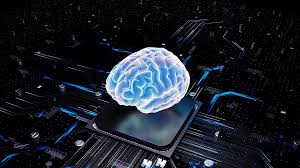
In a world-first experiment that blurs the lines between biology and technology, scientists have successfully used human mini-brains, known as organoids, to power a new type of computer a revolutionary system now being called “wetware.”
This breakthrough merges neuroscience and computing, allowing living brain cells to process information and perform computations similar to and in some ways more efficiently than traditional silicon-based processors.
Researchers at FinalSpark, a Swiss biotechnology startup, unveiled their Neuroplatform, a pioneering biocomputer powered by clusters of human brain cells grown in a lab. The team says this innovation could pave the way for a new generation of energy-efficient, learning-capable machines that mimic the human brain’s ability to adapt and think.
OpenAI Chooses UNILAG as Home for Its First African AI Academy
A Computer Made of Living Neurons
The biocomputer works by connecting 16 human brain organoids tiny spherical collections of neurons about the size of a grain of rice to electrodes that both stimulate and record their electrical activity.
These organoids, derived from stem cells, are kept alive using a special microfluidic system that provides oxygen and nutrients. When electrical signals are sent to them, the neurons communicate, form connections, and even learn to recognize patterns the very basis of intelligence and memory.
According to FinalSpark’s researchers, the living neurons can perform computational tasks using over a million times less energy than modern AI chips, making “wetware computers” an eco-friendly alternative to energy-hungry data centers.
Dr. Nicolas Leresche, co-founder of FinalSpark, said the project shows the power of biological intelligence. He said the living neurons can process complex data with minimal energy and that the company’s goal is to explore how this biological intelligence can complement artificial intelligence.
From Brain Cells to Machines
The concept of using human cells in computers is not entirely new, but this project represents the most advanced version yet. Earlier in 2023, scientists in the U.S. and Japan created a prototype called Brainoware, which used similar organoids to recognize human voices with 78% accuracy.
FinalSpark’s Neuroplatform, however, is the first to be publicly accessible to researchers worldwide via the cloud, allowing other scientists to conduct experiments on the live organoid network remotely.
One of the lead engineers said this isn’t science fiction anymore, adding that scientists are teaching living brain cells to compute and adapt. “It’s the beginning of a new computing paradigm,” he added.
Benefits and Ethical Dilemmas
Experts believe wetware computing could transform the future of artificial intelligence (AI), robotics, and medical research, offering systems that can learn continuously and operate with drastically lower energy costs.
However, the technology raises complex ethical questions about consciousness and human tissue use. Since these mini-brains share structural similarities with parts of a human brain, scientists are debating how far such experiments should go.
A neuroethicist at Michigan State University, warned that researchers must ensure that none of these organoids reach a level of awareness or sentience. She said the line between living tissue and intelligent systems must be respected.
What’s Next for Wetware
FinalSpark says it plans to scale the Neuroplatform to include hundreds of organoids and more advanced neural interfaces that can support AI training and medical simulations.
The researchers believe that one day, hybrid computers combining biological and electronic components could outperform even the most powerful supercomputers using the brain’s natural learning abilities instead of brute computational force.
In a statement, the company said its long-term vision is to integrate the adaptability of the human brain with the precision of digital computing. It described the breakthrough as the dawn of a new age the age of biological intelligence.
While still in its experimental phase, the wetware revolution could redefine what it means to compute and what it means to think.