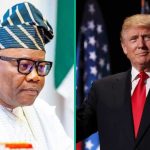
A growing number of United States lawmakers have condemned former President Donald Trump for his recent remarks threatening possible military action against Nigeria over alleged “Christian persecution.” The comments, which have since sparked outrage in both Washington and Abuja, are being described by congressional leaders as “reckless, irresponsible, and dangerous to global peace.”
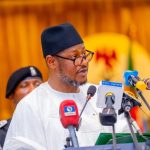
Trump, during a campaign rally in South Carolina, had accused the Nigerian government of “standing by” while Christians were being targeted, vowing that “the Department of War is preparing for action unless Nigeria protects Christians.” His statement immediately triggered a diplomatic backlash, with Nigeria’s Minister of Foreign Affairs, Yusuf Tuggar, reaffirming that the Nigerian Constitution prohibits religious persecution and emphasizing the country’s commitment to protecting all faiths.
In Washington, members of both the Democratic and Republican parties distanced themselves from Trump’s comments. Senator Chris Coons (D-Delaware) described the remarks as “deeply troubling and misleading,” adding that “Nigeria remains a strategic partner of the United States, and military threats are not the way to resolve internal challenges.”
- Similarly, Rep. Gregory Meeks (D-New York), the ranking member of the House Foreign Affairs Committee, warned that such rhetoric undermines U.S. credibility. “Threatening a sovereign African nation with military force over unverified claims is not just irresponsible it’s reckless. We must uphold diplomacy, not disrupt it with inflammatory politics,” Meeks said.
Republican lawmakers also weighed in, with Rep. Michael McCaul (R-Texas) cautioning against “campaign statements that could escalate international tensions.” He stated, “The U.S. has invested decades in strengthening relations with Nigeria. Remarks like these do more harm than good.”
In Nigeria, civil society groups and human rights advocates have also voiced concern over Trump’s statement, urging the federal government to remain diplomatic but firm. The Christian Association of Nigeria (CAN) called for calm, while Muslim groups warned against politicizing religion in international discourse.
Analysts say Trump’s comments could further complicate U.S.–Africa relations, especially as Washington seeks to rebuild strategic partnerships across the continent amid rising Chinese and Russian influence.
As the controversy continues to unfold, both Nigerian and U.S. officials have reiterated their commitment to dialogue, diplomacy, and mutual respect values seen as critical to maintaining peace and cooperation between the two nations.
The uproar surrounding Trump’s statement underscores the sensitivity of religious issues in Nigeria and the growing scrutiny of U.S. foreign policy rhetoric ahead of America’s 2026 elections. For many observers, it’s a reminder that diplomacy not division remains the best path forward.