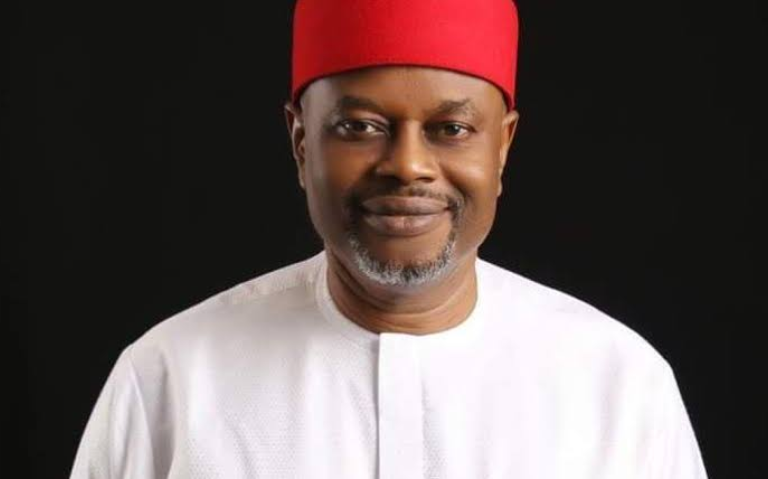
Nigeria’s Minister of Innovation, Science and Technology, Uche Geoffrey Nnaji, has admitted in court that the University of Nigeria, Nsukka (UNN) never issued him a degree certificate. The admission, revealed in an affidavit before the Federal High Court in Abuja, has triggered public debate and renewed scrutiny over the academic integrity of government officials.
According to court documents obtained,, Nnaji stated that although he was admitted to UNN in 1981 to study Microbiology/Biochemistry and completed the program in 1985, the university has yet to issue him a certificate.
“I am yet to collect my certificate from the 3rd Defendant (UNN), due largely to the non-cooperative attitude of the 3rd to 5th Defendants (UNN, its Vice-Chancellor, and Registrar),” the minister said in his affidavit.
He further explained that the university had issued a letter in December 2023 confirming he graduated, but that the letter was later invalidated.
In a letter dated October 2, 2025, UNN Vice-Chancellor, Professor Simon Ortuanya, stated that the institution has no record showing that Nnaji completed his studies or was awarded a degree.
“The university does not have any record confirming that Mr. Uche Geoffrey Nnaji graduated in July 1985 or that he was issued a degree certificate,” the letter read.
Earlier, the university’s Registrar had issued a letter in 2023 indicating that Nnaji graduated, but the statement was later retracted in a correspondence to the Public Complaints Commission in May 2025, citing inconsistencies.
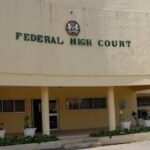
The minister had filed a suit, marked FHC/ABJ/CS/1909/2025, asking the Federal High Court to prevent UNN and its officials from releasing his academic records. He also requested an order compelling the university to produce his transcript.
On September 22, 2025, Justice Hauwa Yilwa ruled on the application, granting three of Nnaji’s prayers but rejecting his request to block UNN from disclosing his academic records.
“The application is partly meritorious,” Justice Yilwa said. “Accordingly, prayers one, two, and three are granted, while prayer four, which sought an injunction, is declined.”
This decision means UNN is free to release the minister’s records to relevant authorities or the public when lawfully requested.
The National Youth Service Corps (NYSC) has also distanced itself from the minister. A senior NYSC official told news outlets that the Corps has no record showing Nnaji participated in the one-year national service, which is a constitutional requirement for all graduates under 30 years old.
“We checked our database and found no evidence of his participation in the NYSC scheme,” the source said.
The revelation has sparked widespread public outcry, with many Nigerians on social media calling for Nnaji’s immediate resignation and investigation. Critics argue that his continued stay in office undermines the credibility of President Bola Tinubu’s administration and raises questions about the thoroughness of ministerial screening by the National Assembly.
A civic group, the Centre for Democratic Integrity (CDI), issued a statement saying, “It is disheartening that after years of advocating transparency and merit in governance, the country still battles cases of questionable academic credentials among public officers. The President should order a full-scale investigation into this matter immediately.”
Others, however, have called for caution and due process. A legal analyst, Barrister Kingsley Ude, noted that while the situation is troubling, the law presumes Nnaji innocent until proven otherwise.
“Until there is clear evidence that he forged a document or lied under oath, the matter remains an administrative and investigative issue, not yet a criminal conviction,” he said.
The controversy surrounding Nnaji’s credentials could have far-reaching implications for Nigeria’s political and ethical landscape. The case has revived discussions about the vetting of public officials, especially given previous certificate scandals involving top government figures.
Observers say if it is confirmed that Nnaji falsely presented himself as a university graduate, he could face prosecution for perjury and forgery, and his appointment could be declared invalid.
Meanwhile, civil society groups and transparency advocates have urged the Federal Government to publish the academic records of all ministers as a way of promoting accountability and public confidence.
For now, the case continues in court as Nigerians await clarity on the true status of the minister’s educational qualifications.