The certificates looked legitimate enough. Crisp university seal. Official signatures. The kind of credentials that open doors to Nigeria’s most powerful offices. But for Minister of Science, Technology and Innovation Uche Nnaji, those documents may tell a story of fabrication rather than achievement.
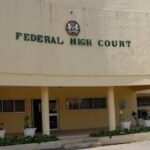
In a 34-page court filing before Justice Hauwa Yilwa at the Federal High Court in Abuja, Mr. Nnaji’s own attorneys made a startling disclosure: their client never collected a certificate from the University of Nigeria, Nsukka (UNN).
“Even though I am yet to collect my certificate from the 3rd Defendant (UNN), due largely to the non-cooperative attitude of the 3rd–5th Defendants,” the minister stated in the document, blaming university officials for withholding his credentials.
Yet two years earlier, during his ministerial screening on August 1, 2023, Mr. Nnaji presented senators with both a UNN certificate and proof of completing Nigeria’s mandatory National Youth Service Corps (NYSC) program.
The contradiction is difficult to reconcile. If UNN never issued him a certificate—as his own legal filing admits—where did the documents submitted for Senate approval originate?
A Political Assent Built on Academic Qualifications
Mr. Nnaji’s credentials formed the foundation of his political ascent. Ahead of his screening, he distributed 109 copies of a 10-page profile to the Senate Clerk’s office, ensuring every senator received his résumé. On page three, he claimed a combined degree in Biochemistry and Microbiology from UNN—notably omitting any graduation year. He stated he was admitted in 1981 and “graduated” in 1985.
His NYSC service, according to the document, included a stint as laboratory supervisor at the University of Jos Teaching Hospital in 1985, followed by work as assistant quality control manager at Jos International Breweries Limited in 1986.
But there’s a procedural impossibility embedded in this timeline: without a university degree, enrollment in NYSC is categorically impossible. The service requires formal graduation as a prerequisite.
The Weight of the Law
Forgery isn’t a minor infraction in Nigeria. It is a felony.
Section 467 of the Criminal Code Act is unambiguous: “Any person who forges any document, writing, or seal, is guilty of an offence which, unless otherwise stated, is a felony, and he is liable, if no other punishment is provided, to imprisonment for three years.” The provision covers both the creation of false documents and the alteration of genuine ones with intent to deceive.
A Familiar Pattern
Mr. Nnaji’s case is far from isolated. It joins a line of certificate scandals that have toppled careers and exposed systemic failures in credential verification in Nigeria since 1999.
1999: The Toronto Certificate Speaker
Salisu Buhari’s tenure as Speaker of the House of Representatives lasted barely two months. On July 23, 1999, he resigned after The NEWS magazine revealed he had presented a forged certificate from the University of Toronto.
The investigation uncovered a double deception: Mr. Buhari was actually 36 years old, not 29 as claimed. The University of Toronto formally disclaimed the certificate he submitted.
2019: A Finance Minister’s Fall
Kemi Adeosun resigned as Minister of Finance after allegations surfaced about a forged NYSC certificate. She presented an NYSC exemption certificate dated September 2009, for ministerial screening in November 2015. The document bore the signature of Yusuf Bomoi, a former NYSC director-general—but was disputed by Maharazu Tsiga, who held the position during the period in question.
2018: The Prosecutor Prosecuted
In December 2018, a House of Representatives panel indicted Okoi Obono-Obla; Special Assistant to President Muhammadu Buhari on prosecutions for forging his West African Examinations Council (WAEC) certificate. The man tasked with pursuing wrongdoers stood accused of the very crimes he was meant to prosecute.
A System to Stop the Cycle
Against this backdrop of institutional verification failures, Nigeria has introduced a potential remedy. As of October 6, 2025, the National Credential Verification Service (NCVS) becomes mandatory for all federal government employees. Every ministry, department, and agency must now verify certificates through a centralized system: the Nigerian Education Repository and Databank (NERD).
This reform shifts responsibility away from individual institutions, which could be pressured or deceived, to a unified national database.Empowered by Section 10(1) of the Education Act of 1985 and proposed by the National Universities Commission in May 2023, NERD is now the official guardian of academic integrity for Nigeria’s higher education credentials.
Whether the system can repair decades of institutional damage and restore public trust in the credentials of those who govern remains to be seen.But for Mr. Nnaji and others like him, the era of unverified claims may finally be drawing to a close.The paper trail, it seems, now leads somewhere concrete.