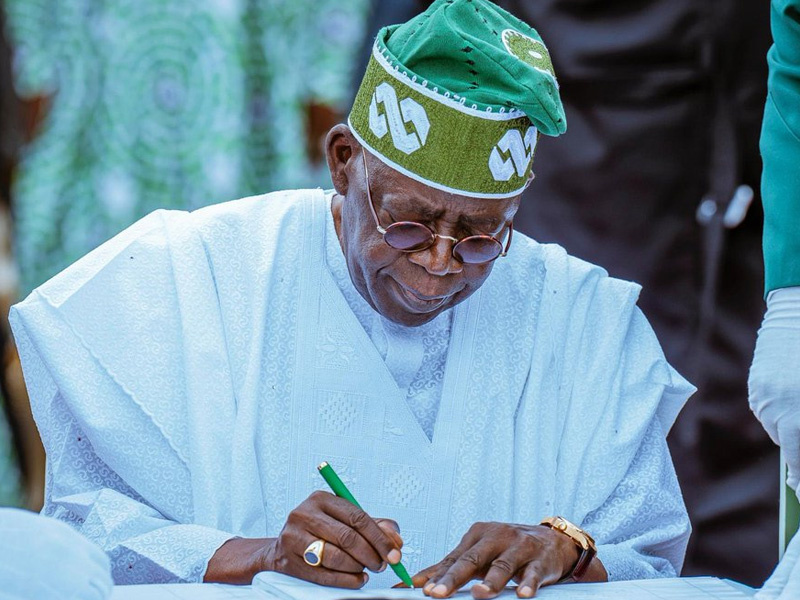
Nigeria’s diplomacy is set for a major reshuffle as President Bola Tinubu has forwarded 32 ambassadorial nominees to the Senate for confirmation.
The list, announced by Presidential Adviser on Information and Strategy Bayo Onanuga, features a blend of seasoned diplomats, former public officials, and established technocrats expected to represent Nigeria in countries pivotal to its global interests.
The nomination slate includes 17 non-career ambassadors, drawn from political leadership, academia, and public service. Among the most notable names are former INEC Chairman Prof. Mahmood Yakubu, ex-President Jonathan’s aide Reno Omokri, former Ekiti First Lady Erelu Bisi Adebayo, and former Lagos Deputy Governor Otunba Femi Pedro. Also on the list are former governors Ifeanyi Ugwuanyi and Victor Okezie Ikpeazu, as well as former Aviation Minister Femi Fani-Kayode, cementing a roster heavily influenced by political experience.
Alongside these are 15 career diplomats, including senior foreign service officers such as Shehu Barde, Ahmed Mohammed Monguno, and Muhammad Saidu Dahiru. Their inclusion signals a bid to balance institutional expertise with political appointments, an approach historically used to reinforce Nigeria’s representation abroad.
The nominees are expected to be deployed to some of Nigeria’s most strategic partner nations, including China, India, South Korea, Canada, Mexico, Qatar, and the United Arab Emirates, as well as African hubs like South Africa and Kenya, while Several others will be assigned to international organisations such as the United Nations, UNESCO, and the African Union, where Nigeria seeks more assertive influence on global governance, trade, and development frameworks.
With the Senate now poised to begin confirmation hearings, the administration is framing the appointments as a diplomatic reboot. Tinubu’s government is betting that this mix of political heavyweights and experienced professionals can help recalibrate Nigeria’s foreign relations at a time when global competition, regional instability, and economic realignment demand sharper international engagement.