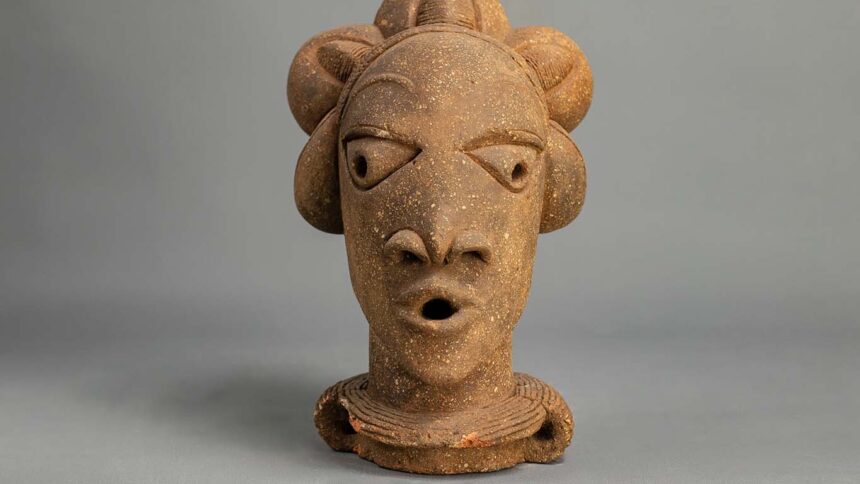
Deep in the heart of central Nigeria, between 1500 BCE and 500 CE, an extraordinary civilization flourished. The Nok culture, named after the village where their artifacts were first discovered, created terracotta sculptures that remain among the oldest and most sophisticated examples of figurative art in sub-Saharan Africa.
The discovery of Nok art happened almost by accident. In 1943, tin miners working near the village of Nok in Kaduna State unearthed a terracotta head. This chance find led archaeologists to uncover thousands of fragments and complete pieces scattered across central Nigeria. The sculptures depict humans and animals with stunning detail and distinctive artistic conventions.
Nok artists developed a recognizable style characterized by elaborate hairstyles, ornate jewelry, and faces with triangular or circular eyes, pierced pupils, and flared nostrils. The technical skill required to create and fire these pieces—some standing over a meter tall—without modern kilns is remarkable. The consistency of style across hundreds of years suggests a stable, sophisticated society with strong artistic traditions.
Beyond their beauty, Nok artifacts provide invaluable insights into ancient African civilization. Excavations have revealed that the Nok people were skilled ironworkers, among the earliest in West Africa to smelt iron. This combination of artistic excellence and technological advancement challenges outdated assumptions about pre-colonial African societies.
Many questions about the Nok remain unanswered. Why did their culture decline? What spiritual or social purposes did the sculptures serve? As archaeologists continue studying Nok sites, each discovery adds another piece to the puzzle of Nigeria’s ancient past and Africa’s rich cultural heritage.