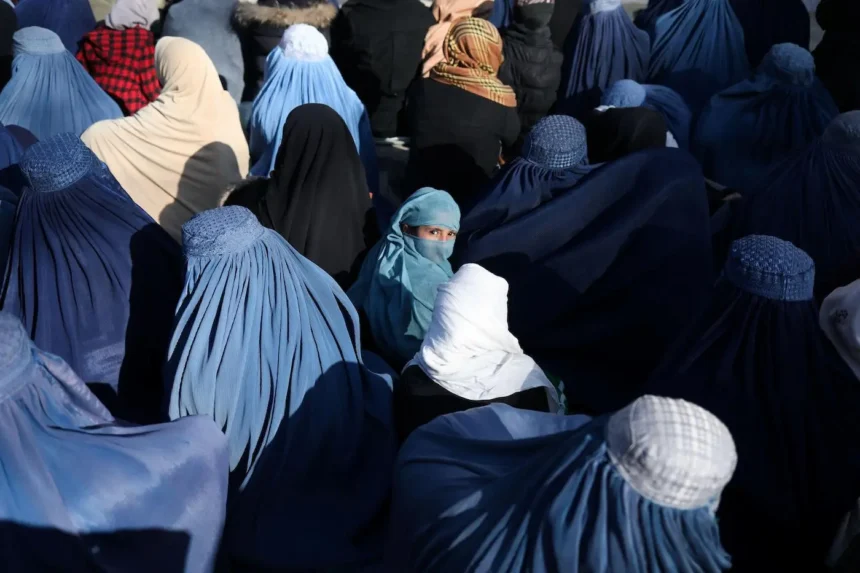
The ruling Taliban has introduced a sweeping new penal code in Afghanistan, triggering widespread condemnation from human rights groups and international observers who say it significantly weakens protections for women.
According to reports, the newly issued criminal code circulated to courts across the country includes provisions that classify spousal violence under discretionary punishment rather than as a clearly prohibited criminal offence. Critics say the framework effectively allows husbands to physically discipline their wives or children unless the abuse results in severe injuries such as broken bones or open wounds.
Under the code, legal consequences may arise only if serious bodily harm can be proven in court. Even in such cases, penalties are reportedly minimal. Rights advocates argue that the high evidentiary burden placed on victims makes accountability extremely difficult in practice.
Women seeking justice face additional barriers. Court appearances require strict dress codes, and in many cases women must be accompanied by a male guardian, potentially the very person accused of abuse. Observers say these conditions create structural obstacles that discourage complaints and limit access to legal remedies.
The penal code also reportedly replaces earlier protections, including provisions from the 2009 Elimination of Violence Against Women law enacted under the previous Afghan government. That earlier framework had criminalised practices such as forced marriage and other forms of gender-based abuse.
Beyond domestic violence provisions, the code is said to introduce broader social regulations affecting women’s movement and family life. Critics argue that these measures further restrict personal freedoms and reinforce gender inequality.
International reaction has been swift.
The United Nations and various rights organisations have raised alarm over what they describe as a deepening erosion of women’s rights since the Taliban returned to power in 2021.
Reem Alsalem, the UN Special Rapporteur on violence against women and girls, has warned that the implications of the new legal framework are deeply concerning and could institutionalize discrimination and abuse.
The Taliban authorities have consistently stated that their legal system is based on their interpretation of Islamic law. However, activists and exiled Afghan groups argue that the latest measures represent a significant rollback of protections and could entrench systemic violence against women.