By Kabiru Abdulrauf
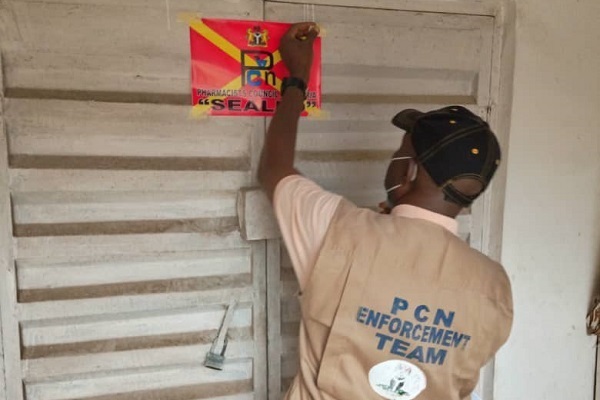
The Pharmacy Council of Nigeria, PCN, has intensified its clampdown on unlicensed and substandard pharmaceutical operations, sealing 6,705 illegal premises and arresting 23 people between January 2024 and August 2025.
The figures, contained in the council’s latest enforcement report obtained on Sunday, provide one of the most comprehensive accounts yet of the regulator’s nationwide operations aimed at sanitising Nigeria’s pharmaceutical supply chain.
The report highlighted numerous infractions discovered during inspections, including, Sale of medicines in open drug markets, Operation of unregistered or unlicensed premises, Stocking of prescription-only medications by patent medicine vendors, Absence of qualified superintendent pharmacists, Poor documentation and record-keeping, Premises operated by underage or unqualified persons
“These practices pose a serious risk to public health, increase the prevalence of counterfeit drugs, and contribute to treatment failures and drug resistance,” the PCN warned.
In 2024, the council carried out eight major enforcement exercises across Gombe, Plateau, Jigawa, the FCT, Bauchi, Cross River, Kaduna, and Adamawa.
6,225 premises were inspected — 887 pharmacies, 2,692 patent medicine shops, and 2,646 illegal shops.
4,115 were sealed, including 329 pharmacies, 1,140 medicine shops, and all 2,646 illegal premises.
55 compliance directives were issued, and 10 arrests were made.
Between January and August 2025, the PCN scaled up its operations with four enforcement drives, one surveillance exercise, and one arrest operation in seven states, including Akwa Ibom, Taraba, Rivers, Bayelsa, Niger, Gombe, and the FCT.
3,343 premises were inspected — 937 pharmacies, 2,405 medicine shops, and one warehouse.
2,290 were sealed, including 500 pharmacies, 1,789 medicine shops, and the warehouse.
48 compliance directives were issued, and 13 arrests were recorded.
This represents a 68% sealing rate in 2025, up from 66% in 2024, reflecting tougher enforcement despite fewer inspections.
PCN Registrar, Ibrahim Ahmed, reaffirmed the council’s resolve to safeguard public health and ensure integrity within the pharmaceutical industry.
“We are committed to upholding excellence in the profession and ensuring the highest standards of practice,” Ahmed said.
“Through effective monitoring, inspection, and enforcement — in collaboration with law enforcement and relevant agencies — we will protect the public from quackery and substandard services.”
The proliferation of illegal pharmaceutical outlets has been linked to rising cases of counterfeit drugs, avoidable deaths, and increased antimicrobial resistance in Nigeria. Experts say the PCN’s crackdown could significantly reduce these risks if sustained, but also warn that regulatory gaps and weak prosecution of offenders may undermine long-term impact.