
By Khadija Muhammad
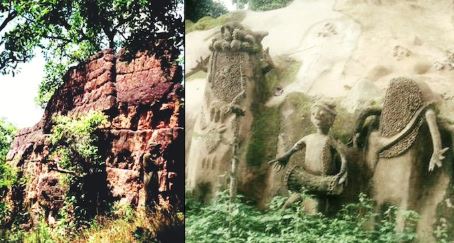
Hidden in southwest Nigeria is one of the world’s most extensive ancient earthworks Sungbo’s Eredo
The monument is a vast system of earthen walls and trenches stretching over 160 kilometres across parts of Lagos state and Ogun State.
In several locations, the walls rise as high as 20 metres, underscoring the technical ambition behind its construction.
Archaeological findings date Eredo to between 800 and 1000 AD, linking it to the Yoruba people of the Ijebu Kingdom.
Beyond its physical scale, Eredo holds deep cultural meaning.
Oral traditions associate it with Bilikisu Sungbo a powerful figure believed by some to be the Queen of Sheba.
Her shrine remains a site of pilgrimage, attracting visitors who come to pray, make vows, and leave offerings.
Today, historians regard Sungbo’s Eredo as one of the largest pre industrial earthworks in the world, often compared to early sections of the Great Wall of China.
Eredo stands as enduring evidence of Africa’s historical capacity for large scale engineering and governance an ancient legacy that continues to shape Nigeria’s cultural landscape.