Hundreds of thousands of Sudanese civilians are fleeing the brutal civil war at home and crossing into eastern Chad, where they face dire conditions and mounting hardship as the crisis stretches on into its third year.
Since fighting erupted in April 2023 between Sudan’s regular army and the powerful paramilitary Rapid Support Forces (RSF), the violence has killed tens of thousands and displaced millions of people both inside and outside Sudan.
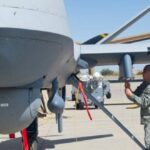
People arriving in eastern Chad describe harrowing journeys under fire, often fleeing areas where drone strikes, air attacks, and ground fighting have become commonplace.
One refugee, Mahamat Hamid Abakar, injured in a drone strike near Um Baru in Sudan, was being treated in the border town of Tine, one of the main crossing points. Many of those arriving suffer from trauma, broken bones, and wounds from explosive devices, reflecting how deeply the conflict’s technology has penetrated civilian life.
Witnesses report attacks on civilians and displacement camps in places like Zamzam and El-Fasher in North Darfur, driving new waves of people out of Sudan.
According to the United Nations High Commissioner for Refugees (UNHCR), the number of Sudanese refugees in Chad has more than tripled since the conflict began. Over 1.2 million people are now registered in eastern Chad, most of them arriving since the violence surged in mid-2023.
Beyond Sudanese nationals, tens of thousands of Chadian returnees, ethnic Chadians who had been living in Sudan have also crossed back into Chad, further stretching limited resources.
Nearly half of the refugees are children, many of whom have witnessed violence or have been separated from family members. Protection risks are high, especially for unaccompanied minors.
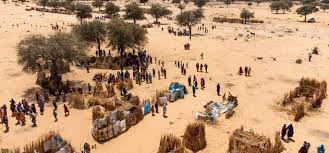
Refugee camps and informal settlements in provinces like Ennedi-Est, Ouaddaï, Sila, and Wadi Fira are struggling with severe overcrowding, limited shelter, and few basics like clean water and sanitation.
The onset of the rainy season makes humanitarian access more difficult, and outbreaks of disease, including cholera have been reported in and around camps, compounding the struggle for survival.
Humanitarian agencies warn that the response is dangerously underfunded, with only a fraction of the funds needed to support refugees and host communities secured so far.