By Aisha Muhammad Magaji
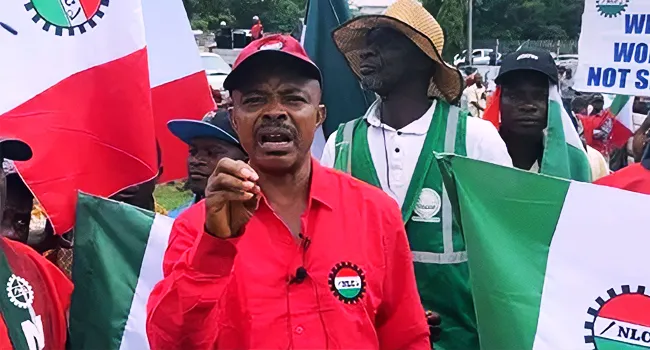
The Nigeria Labour Congress (NLC) has initiated a nationwide strike in response to the dismissal of over 800 Nigerian workers by Dangote Refinery. The refinery, Africa’s largest privately owned facility, cited the layoffs as part of a staff reorganization. However, the NLC and the Petroleum and Natural Gas Senior Staff Association of Nigeria (PENGASSAN) argue that the dismissals were retaliatory actions against unionization efforts.
The conflict began when Dangote Refinery dismissed more than 800 Nigerian workers, many of whom had recently joined PENGASSAN to demand better working conditions and pay. The union claims that the refinery replaced these workers with foreign nationals, predominantly from India, under the guise of a reorganization aimed at improving safety and efficiency. Dangote Refinery has denied these allegations, stating that the layoffs were necessary to counter sabotage and maintain operational standards .
In response, PENGASSAN ordered an immediate halt to crude and gas supplies to the refinery, forcing a temporary shutdown of operations. The NLC has now escalated the situation by mobilizing its affiliates for a nationwide strike, accusing Dangote Refinery of operating a “parallel authority” and undermining workers’ rights .
The Federal Government has intervened, urging both parties to engage in dialogue to resolve the dispute. However, efforts to mediate have thus far ended in deadlock. The refinery obtained a court injunction to prevent the union from obstructing crude and gas supplies, but PENGASSAN claims it has not been officially served with the court order, raising procedural concerns .
Despite the legal proceedings, the strike continues, with union members barricading the entrances to key oil and gas institutions in Abuja, including the NNPC headquarters .
The ongoing strike poses significant risks to Nigeria’s oil production and refined product distribution. The country’s oil industry contributes around 80% of Nigeria’s revenue, and any disruption can have far-reaching economic consequences .
Additionally, the dispute has already led to a reduction in power generation by 1,100 megawatts, further straining the nation’s energy supply .
The public reaction to the strike has been mixed. While some Nigerians express support for the workers’ rights and the need for fair treatment, others are concerned about the potential impact on fuel supply and the economy. Social media platforms have been abuzz with discussions, with hashtags like #SupportNigerianWorkers and #SaveOurRefinery trending.
The NLC’s mobilization for a nationwide strike against Dangote Refinery underscores the deepening tensions between labor unions and private sector employers in Nigeria. As the situation unfolds, the Federal Government faces the challenging task of balancing the interests of workers, employers, and the broader economy. The outcome of this dispute will likely set a precedent for labor relations in Nigeria’s oil and gas sector.