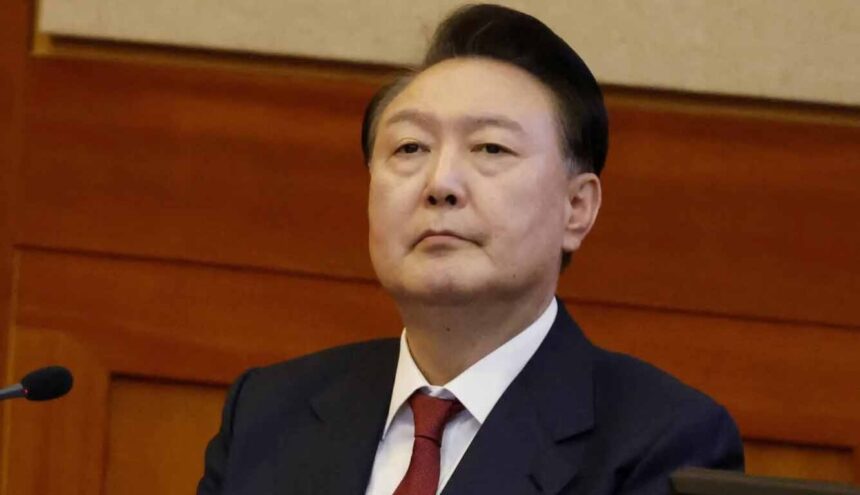
A South Korean court on Thursday sentenced former president Yoon Suk Yeol to life imprisonment after finding him guilty of leading an insurrection through his 2024 martial law declaration.
Yoon declared martial law in a televised address in December 2024, claiming it was necessary to root out “anti-state forces” in the National Assembly. The move led to his impeachment, arrest and prosecution on charges including insurrection and obstruction of justice.
Presiding judge Ji Gwi-yeon told the Seoul Central District Court that Yoon had deployed troops to the assembly building in an attempt to silence political opponents.
“The declaration of martial law resulted in enormous social costs, and it is difficult to find any indication that the defendant has expressed remorse,” the judge said while delivering the life sentence.
Former defence minister Kim Yong-hyun was sentenced to 30 years in prison for his role in the crisis.
Prosecutors had sought the death penalty, but South Korea maintains an unofficial moratorium on capital punishment, with no executions carried out since 1997.
Thousands of Yoon’s supporters gathered outside the court ahead of the verdict, holding placards and chanting slogans. Heavy police presence surrounded the courthouse to prevent unrest.
Yoon has denied wrongdoing, arguing that his actions were intended to safeguard constitutional order against what he described as an opposition-led “legislative dictatorship.”
Under South Korean law, insurrection carries only two possible penalties: life imprisonment or death.
The dramatic case has shaken South Korea’s democratic institutions, reviving memories of past military coups that marked the country’s political history between 1960 and 1980.