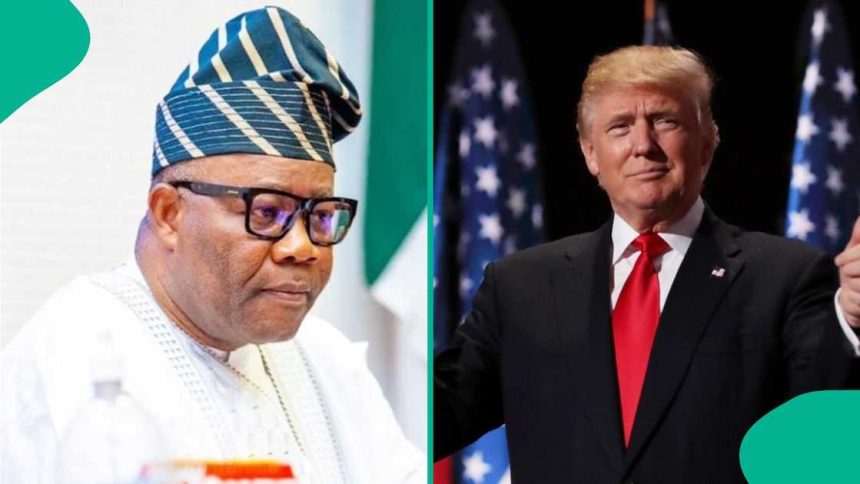
The Nigerian Senate has announced that it will hold a debate over recent comments attributed to former U.S. President Donald Trump, in which he reportedly alleged that a “Christian genocide” was taking place in Nigeria. The decision follows growing domestic and international reactions to Trump’s remarks, which have sparked concern over Nigeria’s image and religious harmony.
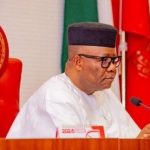
Senate President Godswill Akpabio made the announcement during Tuesday’s plenary session, confirming that the upper chamber would deliberate on the implications of Trump’s comments and their potential impact on Nigeria’s diplomatic relations with the United States.
Akpabio said the Senate would “seek clarification and present a unified national response” to what he described as “a sensitive and potentially inflammatory statement.”
He noted that while Nigeria values its relationship with the United States, such claims if left unaddressed could fuel misinformation and deepen sectarian divides in the country.
“The Senate is taking this matter seriously. Nigeria is a sovereign nation built on religious tolerance and peaceful coexistence. We will not allow any narrative, foreign or domestic, to undermine the unity of our people,” Akpabio stated.
The announcement comes amid global media attention following Trump’s alleged statement calling for U.S. military action if the Nigerian government fails to protect Christian communities. Though Washington has not issued an official position on the former president’s comments, several human rights organizations and international observers have expressed concern about rising insecurity and inter-communal violence in parts of Nigeria.
In recent years, attacks by armed groups, including Boko Haram and Islamic State West Africa Province (ISWAP), have targeted both Christian and Muslim communities, raising fears of religious polarization. However, the Nigerian government has consistently maintained that the violence is driven more by criminal and extremist motives than by religion.
Chairman of the Senate Committee on Foreign Affairs, Senator Adamu Bulkachuwa, said the planned debate would also explore diplomatic engagement with the U.S. government to ensure that “Nigeria’s reputation is not unfairly damaged by politically motivated statements.”
He added that the Senate would invite officials from the Ministry of Foreign Affairs, the National Security Adviser’s office, and the Christian Association of Nigeria (CAN) to provide insights into the issue.
Reactions from civil society groups have been divided. Some religious organizations have welcomed the Senate’s move, urging lawmakers to use the opportunity to highlight the plight of victims of insecurity across faiths. Others, however, criticized what they described as “political grandstanding,” insisting that government action not debate is what Nigerians truly need.
A statement by the Christian Association of Nigeria (CAN) urged caution, noting that while Christians have suffered attacks, “the crisis in Nigeria is a national tragedy that affects people of all faiths.” CAN advised the Senate to focus on strengthening local security structures rather than engaging in a war of words with foreign figures.
Similarly, the Supreme Council for Islamic Affairs (NSCIA) condemned Trump’s alleged comments as “reckless and divisive,” warning that such rhetoric could inflame religious tensions.
Analysts suggest that the Senate debate could serve as a platform to reaffirm Nigeria’s commitment to religious freedom and counter global narratives portraying the country as a hotspot of religious persecution.
As Nigerians await the outcome of the debate, many are calling on political leaders to prioritize national unity, promote accurate information, and intensify efforts to end the violence affecting communities across the nation.