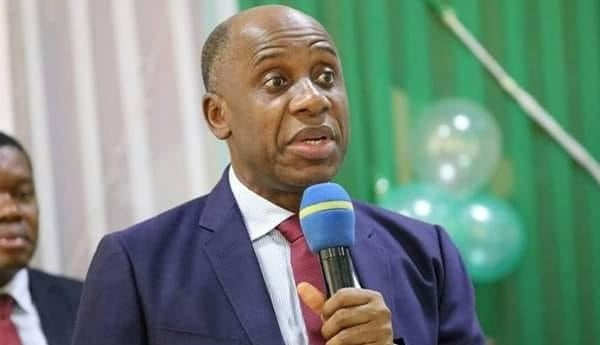
Former Minister of Transportation Rotimi Amaechi has firmly rejected suggestions that he’s being considered for a vice‑presidential slot ahead of the 2027 elections, declaring he is campaigning only for the top job. This statement comes in response to reports linking him to a potential running‑mate role for Atiku Abubakar.
Through his media aide, Amaechi emphasised that he is not seeking to be anyone’s deputy. Instead, he is seriously pursuing the presidential ticket of African Democratic Congress (ADC).
Amaechi’s declaration underscores his broader political ambition: he has publicly vowed to contest the ADC presidential primary and insists he will not step down for any other aspirant. He reiterated that the people, not political back‑room deals, should determine who leads the party into the 2027 election.
In past statements, he has also pledged that, if elected, he would serve a single term, a move he frames as honouring an informal regional power‑rotation agreement meant to balance North–South representation in Nigeria’s presidency.
Political Context: Why the VP‑Slot Talk Emerged
The speculation about Amaechi becoming a vice‑presidential candidate arose after allies of Atiku reportedly began exploring potential running mates from the South, including both Peter Obi and Amaechi. One prominent figure in Atiku’s camp, media entrepreneur Dele Momodu, publicly said that Amaechi could be considered if Obi declines. The rationale cited was Amaechi’s perceived mobilisation strength and political influence, especially among southern voters.
But Amaechi’s response was swift and unambiguous: he ruled out any notion of being a running mate, reaffirming that his sights are set solely on the presidency.
Implications for 2027
By publicly rejecting the VP slot, Amaechi is attempting to assert independence and present himself as a serious contender rather than a backup option. His insistence on contesting the presidential primary of ADC may challenge internal party dynamics, especially given the presence of other heavyweight politicians like Atiku and Peter Obi within the same fold.
Among the risks he faces are criticisms, such as from Nyesom Wike, who earlier described Amaechi’s presidential bid as “dead on arrival,” arguing that Amaechi lacks the grassroots appeal to win national elections.
Moreover, his promise to serve only one term if elected, framed as support for a regional power rotation seeks to assuage concerns about concentration of power. Yet, some analysts view this pledge with scepticism, suggesting it might be more a political tactic than a binding commitment.
What Amaechi’s Own Words Reveal
Amaechi has urged Nigerians to remain vigilant and politically active, arguing that only a united electorate can challenge the current administration in 2027. He has dismissed what he describes as a sense of helplessness among citizens, calling for collective action and electoral engagement to bring change. He also emphasised that his decision to leave his former party was rooted in his belief that the prevailing system no longer represents the people, a shift he frames as necessary for meaningful national transformation.